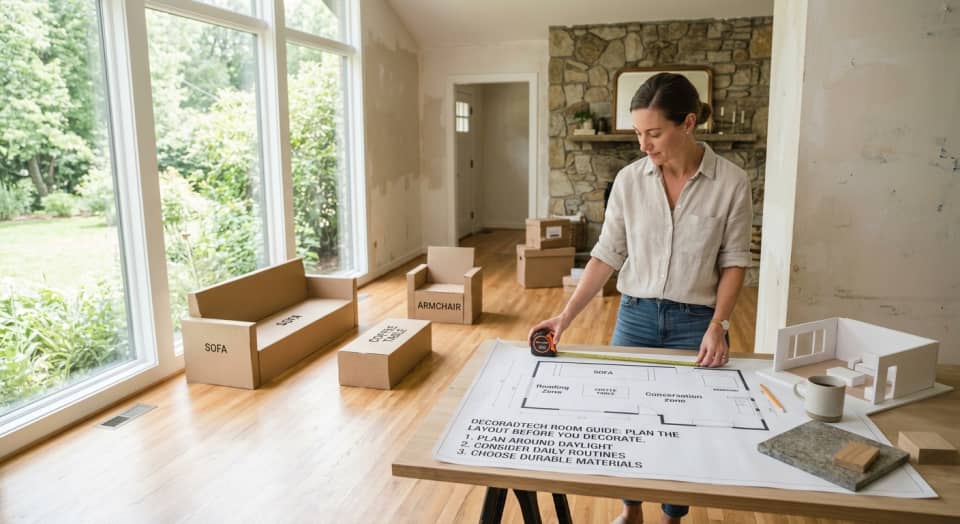
Decoradtech Room Guide: Plan the Layout Before You Decorate
Start with the room’s daily jobs, measure its fixed features, and test furniture positions before choosing paint or accessories. This decoradtech room guide puts clear walkways, usable daylight, and comfortable furniture ahead of styling. A beautiful chair is still the wrong purchase if it blocks a cupboard or forces everyone to squeeze past it.
Plan in this order: function, measurements, circulation, lighting, then finishes. Decorating comes last because it should support a working layout—not disguise one that fails.
What changes the scope of a room refresh?
Moving furniture is a different project from moving sockets or removing a wall. Separate those decisions before setting a budget.
| Scope | Typical work | Main constraint |
|---|---|---|
| Layout reset | Rearrange existing furniture, remove surplus pieces | Furniture dimensions |
| Furnishing refresh | Replace seating, add curtains and lamps | Purchase and delivery costs |
| Surface update | Paint, refinish suitable furniture, replace flooring | Preparation and disruption |
| Building changes | Alter walls, wiring, or plumbing | Professional assessment and local requirements |
Prefer a layout reset first. It can reveal that an awkward room needs a smaller side table rather than a new sofa.
Measure the room as it actually works
Draw a simple floor plan. Record wall lengths, ceiling height, windows, doors, sockets, radiators, and built-in storage. Mark door swings, including cupboard doors.
Measure furniture at its widest and deepest points, not just the legs. Include the operating space for recliners, drawers, and dining chairs.
Then note three things:
- Daily routes: entrance to seating, bed to wardrobe, kitchen to dining table.
- Light conditions: direct sun, darker corners, and screen glare.
- Non-negotiables: accessible routes, heating clearances, rental restrictions, or furniture staying put.
Check the room in morning and evening light. A desk facing a bright window may create uncomfortable contrast even when the room looks inviting.
Test furniture positions before buying
Give the room one primary job
Choose the activity that deserves the best position. In a living room, that might be conversation rather than television. In a bedroom, prioritize access around the bed and to clothing storage.
For a multipurpose room, assign a secondary zone without cutting across the main route. A compact desk against a side wall often works better than a large desk behind the sofa that narrows access.
Place the largest piece, then test movement
Position the sofa, bed, or dining table first. Use low-tack tape to mark proposed footprints, testing it on an inconspicuous area before applying it to a finished floor.
Walk through with a laundry basket. Pull chairs out. Open drawers fully. Include anyone who uses a mobility aid in the test; a route that works for one person may not work for another.
Prefer fewer useful pieces over a matching suite. Two sofas can overwhelm a modest living room where one sofa and a movable chair would leave better circulation.
Plan light around activities
Keep tall storage from unnecessarily shading windows. Position screens to reduce reflections, then check glare from the actual seated position.
Use task lighting where work happens: beside a reading chair, at a desk, or near the bed. Avoid layouts that depend on extension leads crossing walkways. Curtains should operate without snagging on furniture or obstructing heaters; follow the heater manufacturer’s clearance guidance.
Avoid purchases that lock in a bad layout
Do not choose a rug solely because it fits the empty floor. Check its relationship to seating and whether its edges create a trip point on a busy route.
Skip deep storage where shallow storage would hold the same everyday items. Extra capacity is not useful if doors cannot open comfortably.
Also check deliveries. A sofa that fits the room may not clear the stair turn, lift, or entrance.
When this approach needs professional help
Furniture planning is a poor substitute for investigating damp, damaged flooring, inadequate ventilation, or unsafe wiring. Address those problems before covering surfaces.
Hire an appropriately qualified professional for structural alterations, electrical changes, or plumbing relocation. Seek accessibility advice when transfers, turning space, or specialist equipment determine the layout.
Spend for longevity, not a matching set
For a limited budget, keep serviceable furniture and replace the piece causing the biggest obstruction.
For a broader refresh, prioritize repairable construction, replaceable parts, and finishes suited to daily use. Washable covers help only if their care instructions fit your routine. Wood veneer can be durable, but its thin surface limits refinishing compared with solid wood.
Frequently asked questions
Where should I start with the decoradtech room-planning guide?
List the room’s main activities, then measure fixed features and existing furniture before shopping.
How should natural light affect a room layout?
Protect useful daylight, check screen reflections, and provide shading where direct sun becomes uncomfortable.
What changes when planning different rooms?
Bedrooms need storage access; dining rooms need chair movement; living rooms need comfortable seating and clear routes.
How do I choose durable materials without sacrificing style?
Choose a restrained palette, then compare cleanability, repair options, and care requirements—not appearance alone.
What should I check before ordering furniture?
Confirm dimensions, operating clearances, delivery access, assembly requirements, and return terms.
Make the walkway work first
Test the layout before spending on decoration. When ready to develop your plan, open the app with your measurements and priorities beside you.

