Outdoor Kitchen Ideas That Fit Your Space and Budget
The best outdoor kitchen ideas solve the awkward parts of cooking outside: nowhere to set a hot tray, repeated trips indoors and guests blocking the grill. For homeowners and renters alike, a useful setup starts with those daily frustrations—not an appliance catalogue.
What Determines the Size of the Project?
Portable equipment keeps scope modest. Fixed cabinetry, foundations and utility connections increase cost, while difficult access can make installation disproportionately expensive.
Decide early whether you need somewhere to cook or a fully serviced kitchen.
| Planning point | Practical starting point |
|---|---|
| Best for | Regular outdoor cooking near an indoor kitchen |
| Budget range | Low: portable; mid: modular; high: built-in |
| Difficulty | Simple furnishing to licensed-trade construction |
| Time | A weekend setup to several weeks, plus approvals |
| Maintenance | Cleaning, weather protection and seasonal checks |
Plan Around the Way You Cook
- Record your actual menu. Grilling vegetables and fish needs less equipment than pizza-making or entertaining large groups. List preparation, cooking and serving tasks before choosing appliances.
- Measure the working area. Include open cabinet doors, pulled-out chairs and a clear route past the cook. Mark the proposed footprint with tape before ordering.
- Keep indoor support nearby. A short route to the refrigerator and sink can remove the need for outdoor plumbing. Avoid carrying hot food through tight doorways.
- Account for tenure and weather. Renters should seek written permission and favour removable pieces. Check prevailing wind, drainage, frost exposure and afternoon sun before fixing a location.
Choose Portable, Modular or Built-In
Portable equipment for flexibility
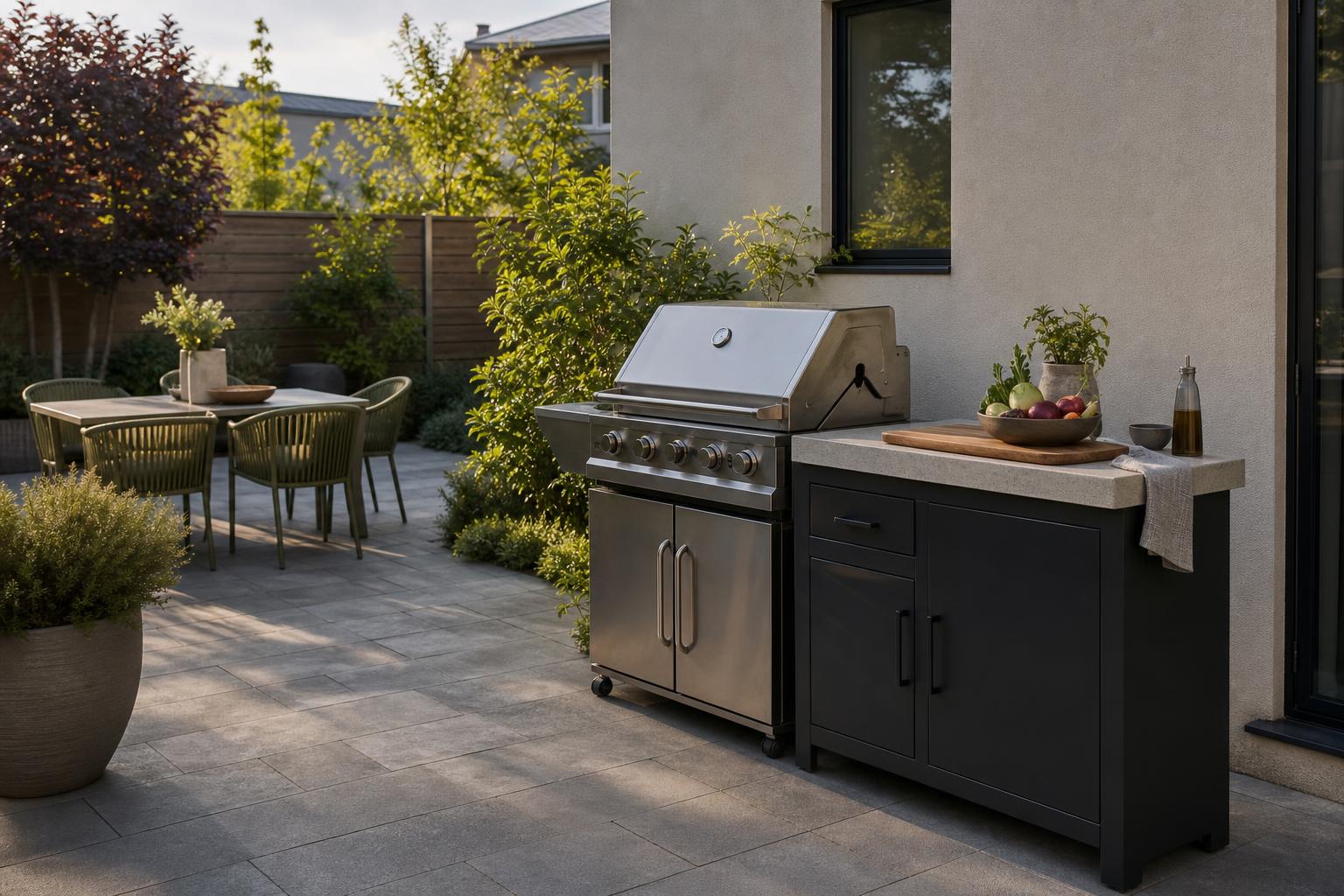
A freestanding grill, stable preparation trolley and lidded storage offer the lowest commitment. They suit changing layouts, though uneven paving and wind can make lightweight furniture unsuitable.
Modular units for a measured upgrade
Prefabricated cabinets reduce custom fabrication and can provide useful worktops. Check outdoor ratings, appliance compatibility and replacement-part availability; not every system accommodates sloping ground.
Built-in kitchens for frequent use
Custom construction can suit awkward boundaries and generous entertaining areas. It also locks in appliance dimensions and service locations, making future replacements harder.
Spend on Infrastructure Before Extras
Treat costs as relative tiers: low for portable equipment on sound existing paving, mid for outdoor-rated modular cabinets, and high for custom construction with new services. Local quotations matter more than broad online price promises.
Request separate prices for ground preparation, cabinetry, appliances, utilities and approvals. Common budget mistakes include adding a sink late, overlooking drainage and buying specialist appliances that see little use. Keep a contingency for concealed site problems.
Check Heat, Services and Permissions
Follow appliance instructions for clearances, ventilation and permitted installation locations. A grill should never be moved indoors or into an enclosed space to escape rain. Overhead structures require particular care; a pergola does not automatically make cooking beneath it safe.
Use appropriately licensed professionals for gas, electrical and plumbing work. Check local approvals, outdoor electrical protection, safe fuel storage and any landlord or building restrictions before purchase.
Match Materials Without Copying the Indoors
Outdoor-rated porcelain worktops, suitable stainless steel and masonry pair well with simple planting and durable dining furniture. Specify products for your climate: coastal salt and freeze-thaw cycles demand particular attention.
Indoor cabinetry, absorbent upholstery and slippery polished flooring are poor companions for exposed cooking areas. Keep combustible furnishings outside appliance clearance zones.
A full kitchen is a poor fit where smoke cannot disperse safely, usable space is scarce or outdoor cooking is rare. A modest permitted setup may serve better.
Make Maintenance Part of the Design
Choose accessible grease trays, replaceable components and worktops without awkward dirt-catching joints. Clean food residue promptly and follow manufacturer guidance for covers and surface care.
In freezing climates, have outdoor water lines properly winterised. Inspect connections, fixings and corrosion regularly, especially after severe weather.
Questions Worth Asking Before You Buy
What is the cheapest useful setup?
A permitted freestanding grill and sturdy preparation table on suitable existing paving usually keep costs lowest.
How much space do I need?
Allow for manufacturer clearances, working room and circulation—not just the appliance footprint.
Does an outdoor kitchen need a sink?
No. Nearby indoor washing facilities often suffice; outdoor sinks add supply, drainage and winterisation requirements.
Can I install one on a balcony?
Only if building rules, structural capacity and fire requirements allow it. Many balconies prohibit fuel-burning appliances.
Is stainless steel rustproof?
No. Grade, finish, exposure and cleaning all matter, particularly near the coast.
Can I build the cabinets myself?
Possibly, with suitable skills and an approved appliance installation design. Utility connections need qualified trades.
Do I need a roof?
Not necessarily. Shelter adds structural and ventilation considerations; appliance instructions govern what is permissible overhead.
What lighting works best?
Use outdoor-rated task lighting over preparation areas, positioned to avoid shadows and glare at the grill.
Start With One Well-Planned Cooking Station
Prioritise safe placement, usable preparation space and easy cleaning. Before committing to construction, explore layout possibilities with the DecorAdTechadvice redesign tool, then verify dimensions and technical requirements with your installer.