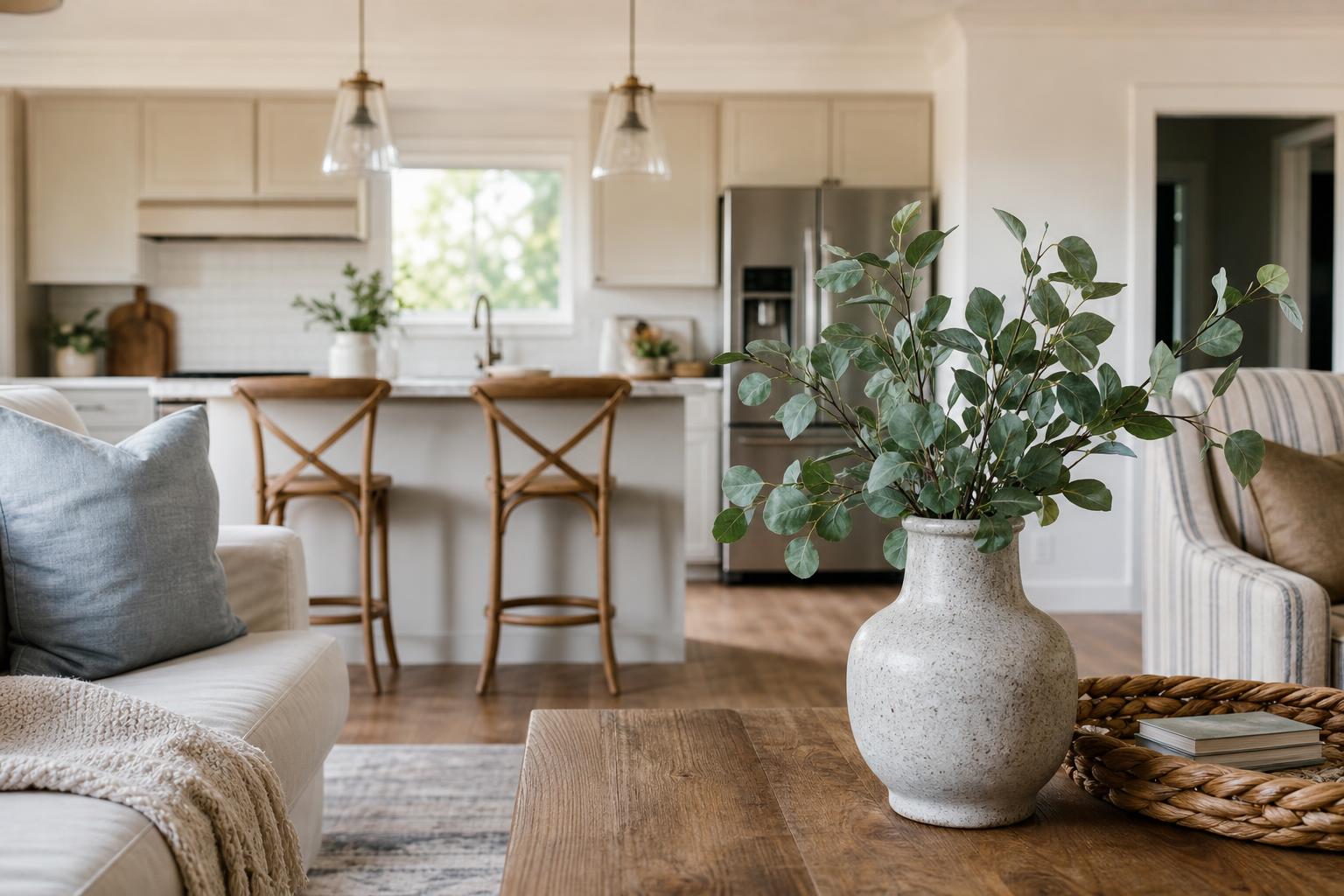
Decorating your house doesn't have to mean hiring a designer or spending a fortune. Most homes improve dramatically once you follow a simple framework: declutter first, fix the layout, choose a palette, layer your lighting, then add the details. This guide from DecoratorAdvice walks through exactly how to do that, room by room, with a style comparison table and real 2026 trend data to help you decide what fits your home.
Where to Start: A Simple Decorating Framework
Before buying anything, work through these five steps in order — most decorating mistakes happen when people skip straight to step 5.
- Declutter first. Empty rooms reveal problems (bad layout, awkward traffic flow) that clutter hides. Remove anything you don't use or love before you plan new decor.
- Fix the layout. Furniture should support how you actually move through and use the room — not just look good against one wall.
- Pick one palette. Choose 2–3 core colors for the whole house, then vary them room to room. This is what makes a home feel cohesive instead of like disconnected rooms.
- Layer your lighting. Overhead light alone makes every room feel flat. Combine ceiling, table, and accent lighting.
- Add texture and personal pieces last. Rugs, textiles, art, and collected objects are what make a house feel like your house.
Which Decorating Style Fits Your Home?
Here's a quick comparison of the styles homeowners search for most, so you can pick a direction before you start buying:
| Style | Color Palette | Key Materials | Best For | Budget Level |
|---|---|---|---|---|
| Modern Farmhouse | Warm whites, soft greige, black accents | Shiplap, reclaimed wood, iron | Families wanting cozy but classic | $$ |
| Japandi | Warm neutrals, muted greens, charcoal | Light wood, linen, ceramic | Small spaces, calm/minimal living | $$ |
| Scandinavian | White, soft grey, pale wood tones | Light oak, wool, glass | Bright rooms, low-clutter homes | $ |
| Warm Minimalist | Cream, terracotta, sand | Plaster, natural stone, linen | Open-plan homes, quiet aesthetics | $$ |
| Modern Heritage | Deep green, chocolate, brass accents | Traditional millwork, wood, brass | Older homes, character-driven spaces | $$$ |
| Eclectic / Collected | Personal mix, layered colors | Vintage finds, mixed textiles, antiques | Homeowners who want a lived-in, storied look | $ – $$$ |
You don't need to commit to one style fully. Most well-decorated homes in 2026 mix 2–3 of these rather than following one look exactly.
Room-by-Room Decorating Tips
Living Room
- Float furniture away from walls if the room allows it — it makes the space feel larger, not smaller.
- Anchor the room with one large rug (too small a rug is the most common living room mistake).
- Layer lighting: overhead + a floor lamp + a table lamp minimum.
- Add one statement piece — a mirror, art, or an interesting light fixture — as a focal point.
Bedroom
- Invest in quality bedding first; it affects how the room feels more than almost any other single choice.
- Keep nightstands and surfaces simple and calm.
- Add blackout curtains for both sleep quality and a more finished look.
- Use warm, dimmable lighting instead of a single bright overhead fixture.
Kitchen
- Keep counters clear — clutter here reads as chaos faster than in any other room.
- Add under-cabinet lighting for both function and atmosphere.
- A backsplash or new hardware refreshes the whole room without a renovation.
- Open shelving for a few curated items works well in Japandi and Scandinavian-leaning kitchens.
Bathroom
- Update lighting around the mirror first — it has the biggest visual impact for the lowest cost.
- Regrout and recaulk before repainting; a clean bathroom reads as a decorated one.
- Add floating shelves or a woven basket for storage without clutter.
Entryway
- Keep it clear of shoes and bags in view — even a small tray or basket solves this instantly.
- One simple mirror plus a light fixture makes the entry feel intentional rather than forgotten.
What's Actually Trending in 2026
If you want your decorating choices to feel current rather than dated in two years, these are the real shifts designers are reporting this year:
- Warm, earthy palettes are replacing cool grey-and-white. Terracotta, olive green, chocolate brown, and deeper caramels are showing up consistently in interiors, alongside darker wood tones. Classic Casual Home
- Homes are becoming more personal, less "perfectly curated." Designers describe a shift toward interiors that feel warmer, more layered, and centered on personality rather than fast-moving trends. Vintage, thrifted, and heirloom pieces are being mixed in deliberately rather than avoided.
- Curved, organic shapes are replacing sharp lines. Curved sofas, rounded islands, arched doorways, and sculptural lighting are increasingly common as homeowners move away from boxy furniture.
- Wallpaper is back as a centerpiece, not an accent. Botanical prints, textured grasscloth, and mural-style wallpaper are being used as a defining feature of a room rather than a decorative extra.
- Real materials over faux finishes. Plaster walls, natural stone, solid wood tones, and natural textiles are defining spaces, with designers moving away from decorative faux finishes.
- Closed-off home offices are back, as more people want a door they can shut while working from home.
Budget-Friendly Decorating Tips
- Start with one room instead of spreading a small budget across the whole house.
- Repaint before you replace — it's the cheapest way to change a room's entire mood.
- Shop secondhand and vintage marketplaces for character pieces; 2026's "collected" look favors this anyway.
- Rearrange existing furniture before buying new — layout fixes are free.
Common Decorating Mistakes to Avoid
- Buying decor before fixing the layout. Pretty items can't fix a room that doesn't flow.
- Matching everything too perfectly. A home that looks like a showroom often feels cold; slight imperfection reads as "lived-in."
- One light source per room. Flat overhead lighting undercuts even well-chosen furniture.
- Ignoring scale. A too-small rug or too-small art piece is the most common reason a room feels "off" without an obvious cause.
Frequently Asked Questions
How do I start decorating my house with no experience? Start with decluttering and layout — both are free and solve more problems than any purchase will.
What's the cheapest way to make my house look decorated? Paint, lighting layers, and removing clutter make the biggest visible difference for the lowest cost.
Should I follow one decorating style exactly? Not necessarily — most well-decorated 2026 homes blend two or three styles rather than following one rigidly.
How often should I update my home's decor? Small elements (textiles, accessories, paint) every 2–3 years; bigger elements (flooring, cabinetry) every 10–15 years or as needed.
Final Thoughts
You don't need a full renovation to make your house feel decorated — you need a clear layout, a consistent palette, layered lighting, and a few personal pieces that make the space feel like yours. Start with one room, apply the framework above, and build from there.
For more room-by-room guides and design inspiration, keep exploring DecoratorAdvice.