Latest News Decorator advice.com: Test a Room Before Renovating
A decorating idea can look convincing on a screen and feel wrong within minutes of entering your home. The colour turns flat after sunset. A generous chair blocks the balcony door. A textured wall finish catches every mark beside the dining table. None of these problems is obvious in a carefully framed photograph.
For readers searching for Latest News Decorator advice.com, this article offers a practical room-testing method, rather than a verified news roundup from that website. The aim is to make promising ideas work before you commit to permanent changes.
A room trial suits homeowners planning phased improvements, renters who need reversible solutions, and anyone uncertain about a finish or layout. Start with one clearly defined problem, test a limited change, and let everyday use guide the next decision.
What makes a room trial expensive?
Scope grows when a decorative change affects wiring, plumbing, fitted joinery or the condition of the surface underneath. Moving a lamp is inexpensive; adding a socket is not.
Delivery, preparation, installation and removal can cost more than the visible product.
| Factor | Room-trial guidance |
|---|---|
| Best for | Uncertain colours, furniture layouts, lighting and window treatments |
| Budget range | Low for samples; mid for movable furnishings; high for fitted work |
| Difficulty | Simple observation and measuring, with professionals for regulated work |
| Time | Usually one to two weeks of testing, excluding ordering and installation |
| Maintenance | Check cleaning instructions and access before approving each material |
A sample, a mock-up and a pilot room do different jobs
A sample shows the actual material: paint on a board, a fabric cutting or a flooring offcut. It helps you judge colour, texture and finish.
A mock-up represents size or position. Cardboard can show a proposed headboard outline; removable floor markers can indicate a cabinet footprint without buying it.
A pilot room is a small completed project used to settle decisions before repeating them elsewhere. It is particularly useful when the same paint, hardware or flooring is planned across several rooms. Success in one room still needs checking against the light and conditions in another.
Plan around the room’s hardest-working moments
1. Name the problem before choosing the look
Write a short brief describing what fails now. “The living room needs updating” is too broad. “There is nowhere comfortable to read after dark, and the curtains expose the room at night” gives you two testable priorities.
Choose one primary improvement and one secondary benefit. This keeps a lighting project from turning into an unplanned furniture replacement. Take photographs from the entrance and the main seating position so you have a useful record of the starting point.
2. Measure movement, not just floor area
Record door swings, radiator positions, sockets, window openings and furniture dimensions. Include the space needed to pull out a dining chair or open a drawer fully.
In a small room, test the busiest route first. Carry a laundry basket through it, open the sofa bed and check access to storage. A layout that works only when everything remains closed is not a workable layout. Allow for the actual occupants’ mobility needs rather than relying on a generic clearance number.
3. Make rental changes genuinely reversible
Check the lease and obtain written permission where required. “Removable” wallpaper and adhesive hooks can still lift paint, stain surfaces or fail in damp conditions.
Test an inconspicuous area using the manufacturer’s instructions. Keep original fittings labelled, and allow space to store them safely. Freestanding storage, plug-in lighting and loose textiles usually offer more predictable reversibility than adhesive finishes. Include removal and reinstatement in the budget, not just the purchase price.
4. Account for sun, humidity and heating
Observe the room at morning, midday and evening. Direct sun can reveal glare, fade textiles and make dark surfaces uncomfortably warm. Cooler daylight may shift a pale neutral towards blue or green.
In humid climates, prioritise cleanable materials, ventilation and drying time. In heated homes with dry winter air, check the supplier’s acclimatisation and humidity guidance for timber products. Never use decorative cladding to hide condensation or damp; establish the cause before covering the surface.
5. Set a spending limit and a decision date
Divide your allowance into testing, purchases, labour and contingency. Protect money for the unglamorous necessities: brackets, suitable fixings, delivery and surface preparation.
Give the trial a defined review date, usually after at least one normal working week and a weekend. Do not let samples become permanent clutter. At review, record a decision: approve, modify or reject. A rejected sample is a useful result if it prevents a larger, non-returnable order.
Run a test that resembles ordinary life
Place paint samples vertically near the intended wall, not flat on a table. Use the specified primer and number of coats where relevant. Look at them beside flooring, curtains and fixed finishes, under both daylight and the lamps you actually use.
For lighting, try position before brightness. A reading lamp behind the shoulder behaves differently from the same lamp across the room. Check whether the source reflects in a television or shines into someone’s eyes.
Then live normally. Watch television, clear the dining table, vacuum around the furniture and close the curtains. Keep a short note of repeated irritations. One awkward moment may be incidental; the same obstruction every evening deserves attention.
Change one major variable at a time where possible. Replacing the bulbs, rug and wall colour together makes it harder to identify which change helped.
Choose the right level of design help
Self-directed testing
This is well suited to paint, accessories and straightforward furniture arrangements. It keeps fees low and lets you test at your own pace. The limitation is coordination: individual choices may work separately but compete when assembled.
Maintain one reference sheet with dimensions, samples and proposed purchases. It reduces duplicate buying and keeps decisions consistent.
A focused design consultation
A paid consultation can resolve a specific uncertainty: curtain proportions, a difficult layout or an inconsistent lighting scheme. Ask what the fee includes, such as a marked-up plan, written recommendations or a follow-up conversation.
Photographs and measurements make the session more productive. Remote advice may suit decoration, but it cannot establish hidden site conditions.
A measured design and installation service
Fitted storage, extensive window treatments and coordinated renovations often justify professional measurement and documentation. Fees are higher, but responsibility for specifications and installation can be clearer.
Confirm who checks dimensions, orders materials, manages trades and handles defects. Design advice does not replace licensed electrical, plumbing or structural expertise.
The purchases that quietly expand the scope
Buying the statement piece first is a common budget trap. An oversized pendant may require electrical work; a heavy stone table may complicate delivery and floor protection. Check installation needs before paying a deposit.
Small samples create another risk. A tiny fabric cutting cannot reveal the full repeat of a large pattern, and one flooring board cannot show the variation across a batch. Ask for larger samples or photographs of a substantial installation, while recognising that images distort colour.
Avoid buying every coordinating item at once. Matching sets can leave a room visually flat, and promotional bundles may include pieces you do not need.
Finally, distinguish refundable from non-refundable spending. Made-to-measure curtains, tinted paint and special-order furniture often have restricted returns. Read the terms before ordering, and approve dimensions in writing. Keep a record of product codes and finishes so substitutions are not accepted accidentally.
Safety and permissions come before appearance
Have fixed electrical work assessed and carried out by an appropriately licensed professional under local requirements. Do not trail temporary cables across circulation routes or overload extension leads during a lighting trial.
Before drilling, establish whether concealed services may be present and choose fixings suitable for the wall and load. Tall furniture may require anti-tip anchoring even when the arrangement is temporary. Follow the manufacturer’s instructions and obtain permission where necessary.
Keep curtains and furniture clear of heat sources using the appliance manufacturer’s stated clearances. Choose child-safe window-covering controls and address accessible cords.
If preparation could disturb suspect lead paint, asbestos-containing materials or other hazardous finishes, stop and seek qualified advice. Sanding an unknown older coating is not a harmless decorating experiment.
Pair changes by function, then by appearance
Some improvements work better together. A reading chair needs a useful light source and somewhere to place a book. A bedroom curtain scheme needs both the desired appearance and suitable privacy or light control.
For visual balance, pair strongly textured surfaces with quieter neighbours. A pronounced woven fabric can sit comfortably beside plain upholstery; patterned flooring may need a less active rug. This is not a ban on pattern mixing. It is a way to keep the room’s main feature legible.
Watch for practical clashes. A thick rug can obstruct a low door. A floor lamp may compete with a curtain stack for the same corner. Deep shelves can reduce usable space beside a narrow bed.
Mixed metals and warm and cool colours can work together. Test their proportions rather than assuming every finish must match exactly.
When a room trial is the wrong starting point
Testing decoration will not solve a leaking roof, persistent mould, failing electrics or inadequate heating. Investigation and repair come first.
A short trial is also insufficient for major accessibility changes, structural alterations or kitchen layouts involving services. Those projects need measured planning and relevant professional input before purchasing.
Nor can a week of use prove long-term durability. Outdoor furniture, wet-area finishes and heavily used flooring need documented suitability for their intended conditions. A sample may look excellent while the product remains inappropriate for the job.
Plan maintenance before approving the finish
Ask how each material is cleaned, what can damage it and whether it can be repaired locally. A finish that needs specialist treatment may be reasonable in a quiet bedroom but inconvenient beside a busy entrance.
Check fabric care instructions rather than assuming removable covers are machine washable. Look for access to curtain tracks, lamp fittings and the space beneath furniture. If cleaning requires dismantling half the room, maintenance will probably be postponed.
Keep care instructions, receipts and finish references together. Retain spare tiles or flooring where storage permits, and ask how paint touch-ups are likely to blend after ageing.
Review the room after a season as well as after installation. Summer glare and winter condensation may reveal issues that were absent during the initial trial.
Budget by commitment, not just product price
Use three spending levels to separate testing from permanent work:
- Low commitment: sample pots, fabric cuttings, cardboard mock-ups and rearrangement. Costs remain modest unless sampling becomes excessive.
- Medium commitment: a rug, ready-made curtains, plug-in lamps or a freestanding storage piece. Delivery, return charges and assembly need checking.
- High commitment: custom upholstery, made-to-measure window treatments, built-in joinery and changes to services. Measurement errors and late revisions become much more expensive.
As an illustrative planning allowance, a modest room trial might reserve 5–10% of its decorating budget for samples, delivery tests and limited advice. This is an example, not a market benchmark; a simple paint project may need less, while a technically awkward room may need more upfront investigation.
Request itemised quotations for permanent work. Compare preparation, materials, labour, waste removal and taxes on the same basis. A lower headline price is not necessarily cheaper if essential work is excluded.
Questions before you commit
How long should I test a paint colour?
Observe it over several days, including a bright day if possible, and under evening lighting. Wait for the sample to dry as directed before judging it.
Can a digital room visualiser replace physical samples?
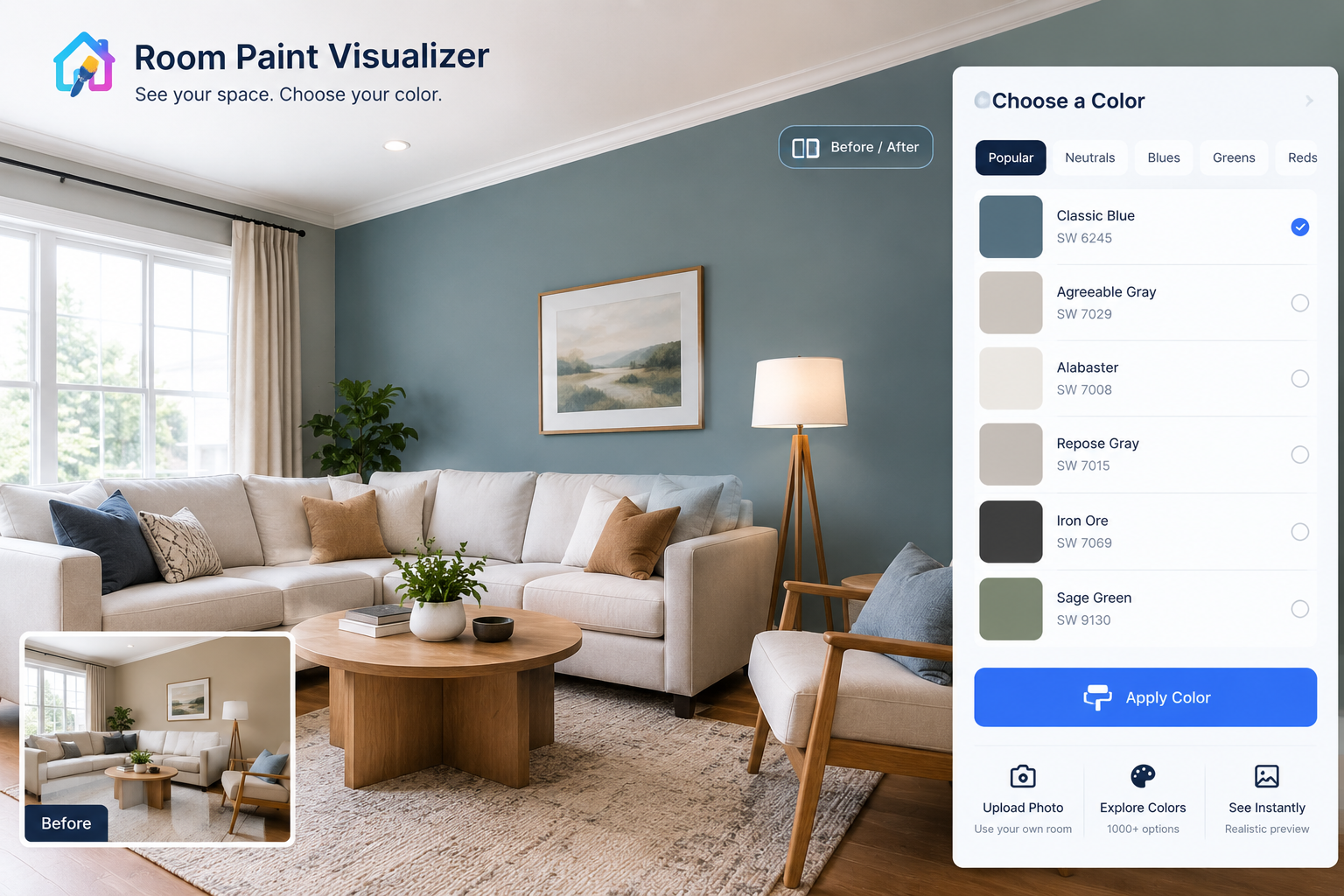
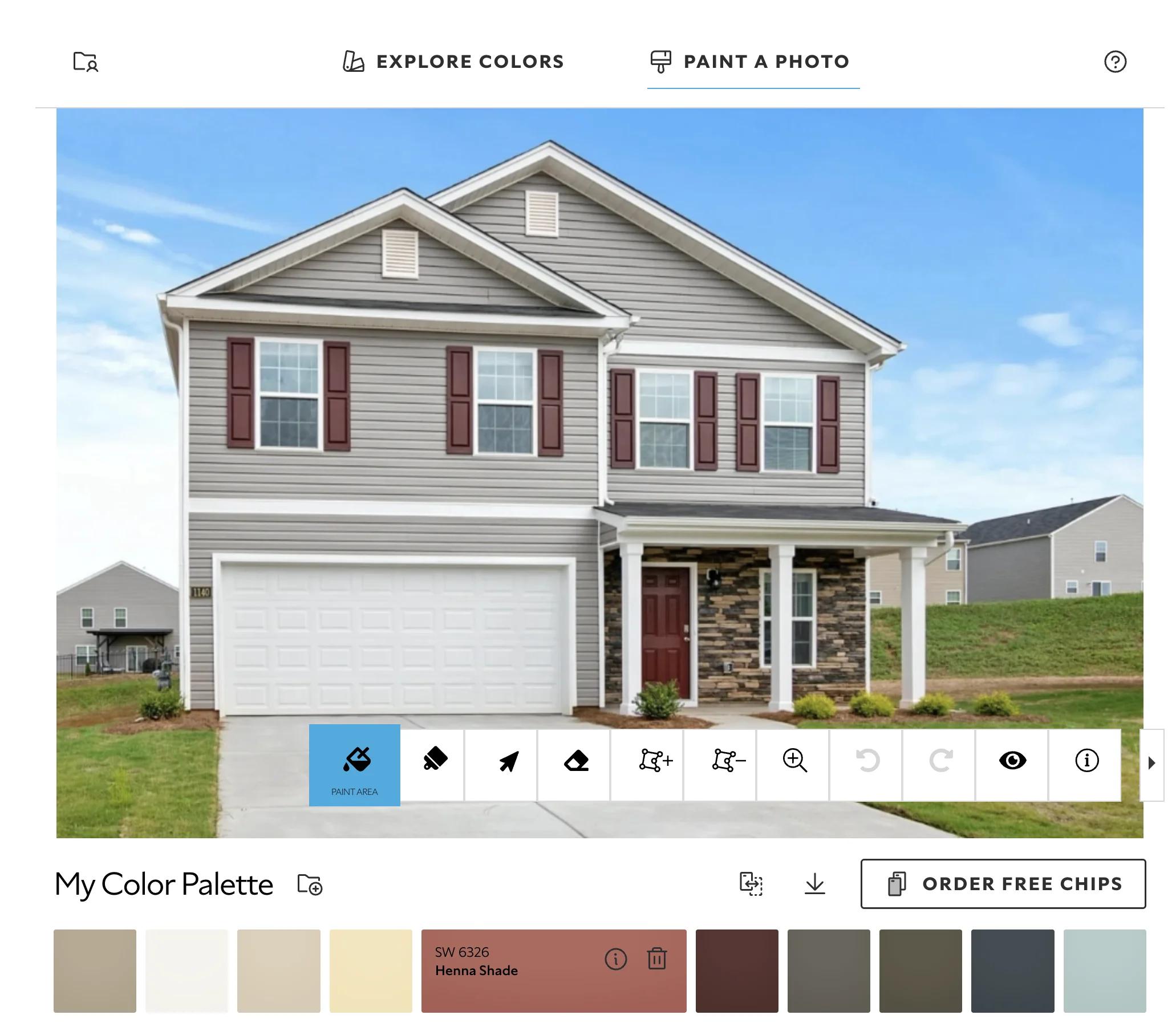
No. It helps with broad colour relationships and layout, but screen settings and rendering cannot reliably reproduce texture, sheen or colour under your room’s light.
Which room should I test first?
Choose a frequently used room with a manageable problem and limited technical work. Avoid starting with a rarely used guest room simply because it feels less risky.
Should every room use the same paint?
Not necessarily. A consistent palette can connect spaces, but the same paint may look different with another orientation or floor finish. Check it in each intended room.
Is peel-and-stick wallpaper safe for rentals?
Only if the tenancy terms and surface conditions allow it. Adhesives vary, and removal can damage paint. Test first and do not treat “renter-friendly” as a guarantee.
What if two people prefer different schemes?
Agree on functional priorities and spending limits first. Then compare a small number of samples in the room. Separate a genuine comfort issue from a preference about appearance.
Can I test furniture without ordering it?
Mark the footprint with surface-safe materials and build a simple cardboard outline for height. This checks scale and movement, but seating comfort still requires an actual trial.
Should I change bulbs before repainting?
If the current lighting is unsuitable, settle that first. Different colour temperatures and colour-rendering quality can alter how paint appears. Recheck samples under the intended final lighting.
What should I check before ordering curtains?
Confirm track or pole position, finished dimensions, fullness, lining, stack-back space and cleaning requirements. For made-to-measure orders, establish who takes responsibility for measurement and fitting.
When should I stop testing and decide?
Decide when the option meets the brief, fits the budget and has no unresolved installation or maintenance issue. More samples rarely help once you are comparing barely perceptible differences.
Commit after the room earns your confidence
The most useful decorating test is not the one that produces the prettiest photograph. It is the one that confirms a change works during ordinary life, without introducing another problem.
Start with one room and one clear priority. If you need help comparing arrangements before buying, use the DecorAdTechadvice redesign tool to explore possibilities, then verify the preferred option with measurements and physical samples.