| Planning point | What to expect |
|---|---|
| Best for | Sound rooms whose furniture and finishes feel disconnected |
| Budget range | Low for rearranging and textiles; mid for painting and lighting; high for upholstery or fitted work |
| Difficulty | Manageable DIY for styling; professional help for specialist work |
| Time | A weekend for rearranging; several weeks where samples, trades or custom orders are involved |
| Maintenance | Routine cleaning, finish-specific care and occasional textile replacement |
| Spending level | Typical scope | Main budget pressure |
|---|---|---|
| Low | Rearrangement, selective accessories, minor repairs and a few textile changes | Repeated small purchases and delivery fees |
| Mid | Room painting, ready-made curtains, better lamps or one substantial furniture purchase | Preparation, installation and product quality |
| High | Custom window treatments, quality reupholstery, fitted storage or coordinated trade work | Skilled labour, fabric quantities and bespoke detailing |
-
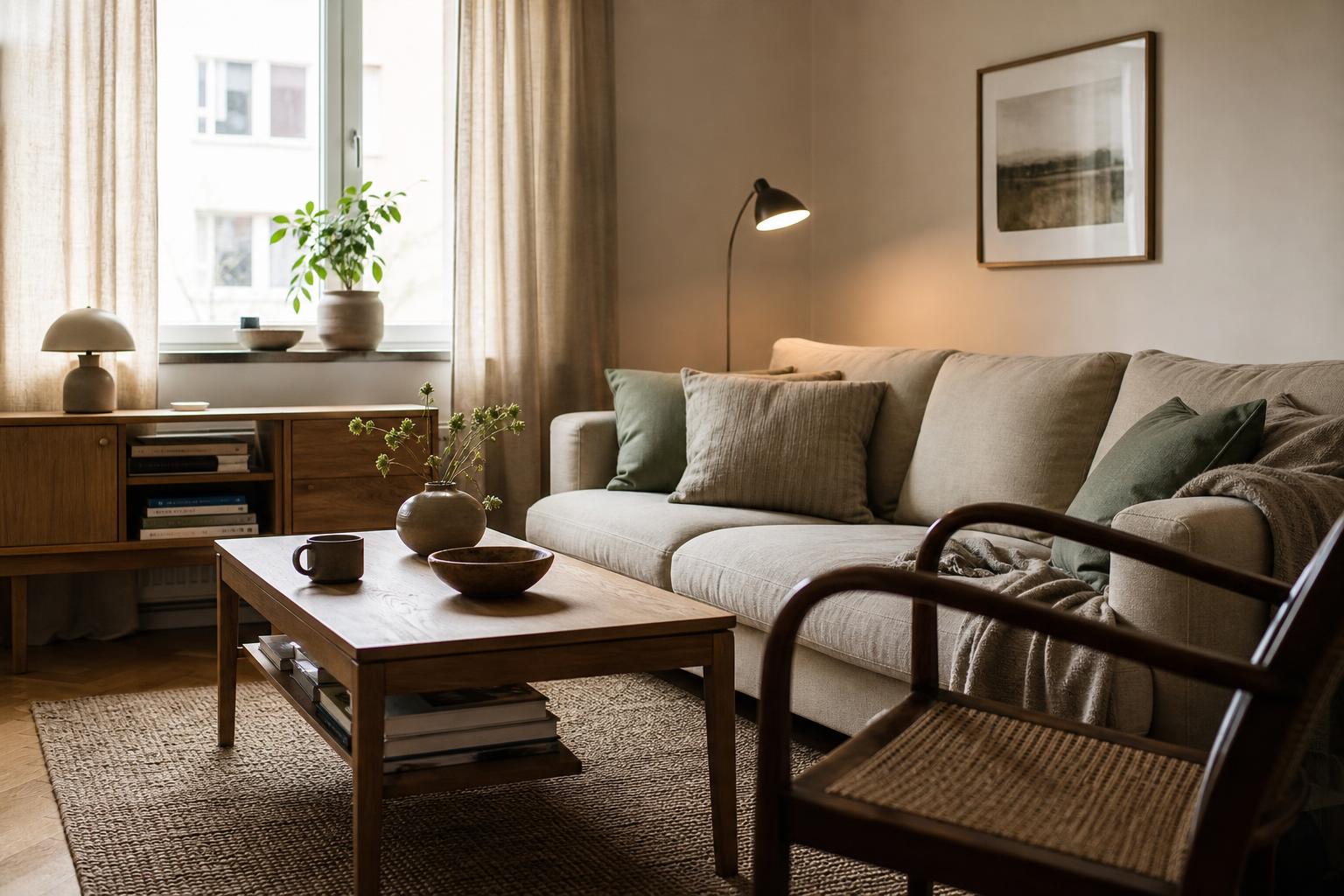
Warm timber and softened greens: often comfortable together, provided the green does not turn unexpectedly blue beside the wood.
-
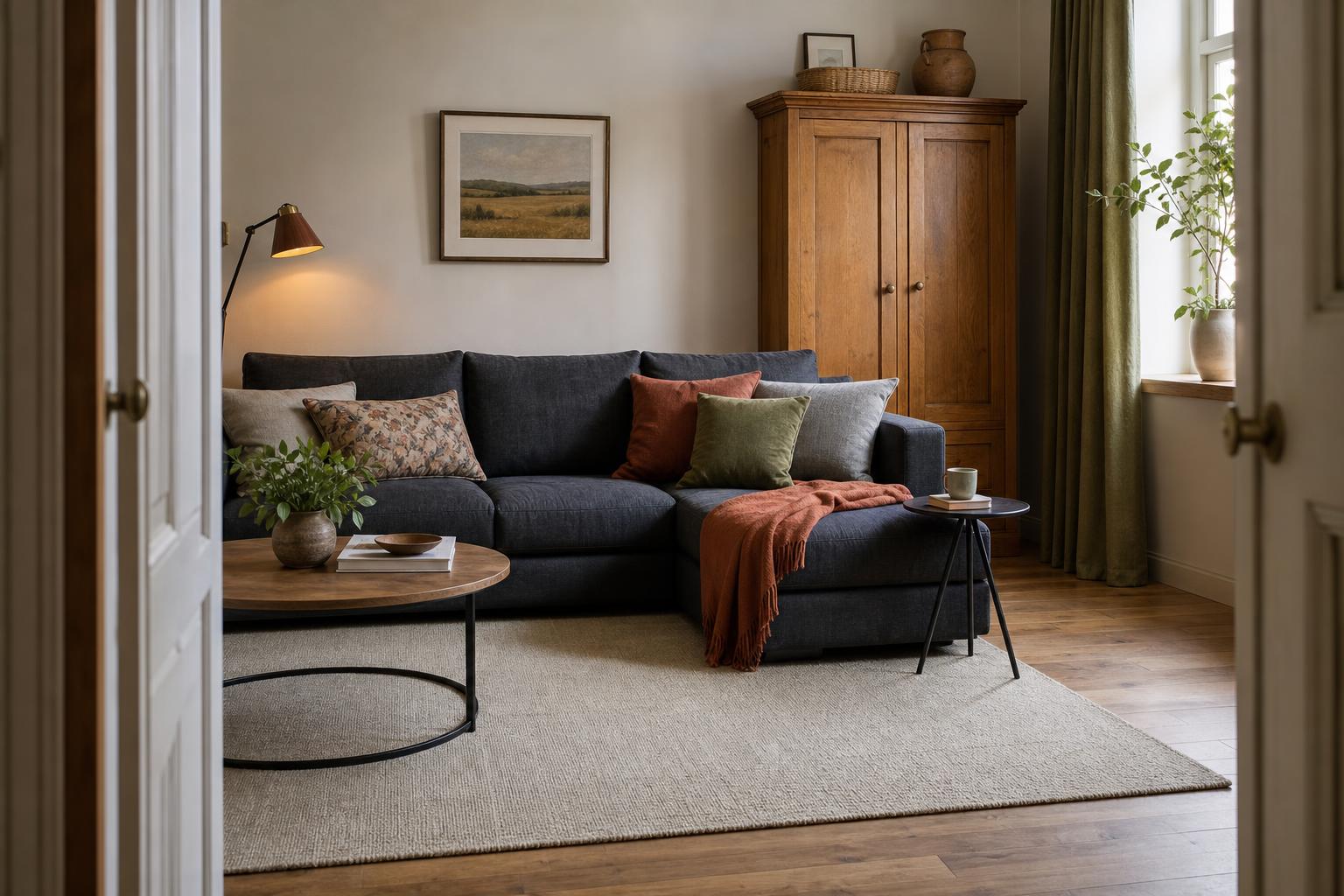
Dark upholstery and lighter texture: curtains, rugs or woven shades can prevent a heavy sofa from dominating.
-
Different wood finishes with a shared quality: similar warmth or repeated grain character can create a connection without exact matching.
-
Old furniture and simpler new pieces: quieter shapes give ornate or distinctive furniture room to be appreciated.
-
Ordering custom curtains before deciding on the track position.
-
Buying upholstery fabric before an upholsterer confirms suitability and quantity.
-
Repainting without pricing preparation and repairs.
-
Purchasing discounted furniture that requires costly alteration or delivery.
-
Treating every metal finish as something that must be replaced to match.
-
Replaceable covers or separately available components.
-
Paint finishes appropriate to cleaning needs and surface condition.
-
Textiles with stated performance information suitable for their intended use.
-
Furniture details that allow access for vacuuming and dusting.
latest decoratoradvice .com: Design Around What You Already Own
What determines the size of the refresh?
Identify the room’s anchors and undertones
Make a plan before choosing a palette
1. Separate what stays from what merely occupies space
2. Name the problem precisely
3. Set rental boundaries early
4. Protect space for everyday movement
5. Let climate influence materials
6. Give the budget a stopping point
Choose the level of help the room needs
A self-managed refresh
A focused design consultation
A designer-led or trade-led project
Connect old and new without making everything match
Spend on the mismatch, not the whole room
Respect the limits of decorative work
When keeping the existing scheme is the wrong economy
Choose finishes you can live with and maintain
Budget by work category, not by inspiration image
Questions that come up before a room refresh
Should I choose paint or fabric first?
Can warm and cool colours work together?
Must every wood finish match?
What should I change first on a tight budget?
Is reupholstering always cheaper than buying new?
How many samples do I need?
Can removable wallpaper work in a rental?
How do I avoid a room looking too coordinated?
Will a digital room preview show colours accurately?
Let the retained pieces guide the next decision
Related reading
A decorating photograph usually shows a finished room. Your home presents a different starting point: a serviceable sofa, flooring you cannot replace, an inherited cabinet and perhaps a rental agreement that rules out painting. The challenge is making those pieces belong together without replacing everything around them.
If you arrived through a search for latest decoratoradvice .com, this article offers a practical room-planning method, rather than a verified digest of that website’s newest posts. The focus is what to do with inspiration once you have it: build a considered scheme around the things that will stay.
This approach suits homeowners making gradual improvements, renters with limited permissions and anyone furnishing a small room on a controlled budget. Begin with the room you have, not an empty shopping basket.
Cost depends mainly on how many fixed surfaces you change, whether furniture needs repairing, and how much professional labour is involved. Keeping sound flooring and large furniture usually contains the scope. Window treatments, upholstery and electrical alterations can turn an apparently modest refresh into a substantial project.
An anchor is an element with enough visual presence to influence the room. It might be a dark floor, a large sofa or a stone fireplace. It does not need to be your favourite possession; it simply needs to be acknowledged.
An undertone is the subtle colour beneath an apparent neutral. A beige curtain may lean pink, yellow or grey. Two neutrals can therefore sit awkwardly together despite looking similar on separate sample cards.
Start with the largest permanent surfaces. Their relationships matter more than the colour of a vase or cushion.
List the main items under three headings: keep, repair and reconsider. Assess comfort and condition before appearance. A sofa with failed support is not a sensible foundation simply because a new cover could disguise it.
Photograph each wall in daylight. Pictures often reveal visual imbalance more clearly than standing in the room: several small pieces crowded together, for example, or all the dark furniture concentrated at one end.
Measure retained furniture, doorways and delivery routes. Record radiator positions, socket locations and door swings alongside the room dimensions.
“Dated” is too broad to guide spending. Try a more useful description: the curtains look yellow against the walls; the seating feels undersized; the lighting leaves one corner unusable.
Choose one primary problem and two secondary ones. This prevents a colour refresh from expanding into unrelated purchases. A room with uncomfortable evening lighting may benefit more from better-positioned lamps than from new upholstery.
Check the lease and obtain written permission before changing paint, fittings or window hardware. Removable products are not automatically damage-free; adhesives can lift weak paint or leave marks on porous surfaces.
Prioritise portable investments such as lamps, rugs and freestanding storage. Keep original fittings safely labelled if approved replacements must be reversed before moving out. Include reinstatement costs in the budget, rather than treating them as a future problem.
In a small room, mark proposed furniture footprints with low-tack tape after testing it on the floor. Open cupboards and pull out dining chairs. Check whether someone can pass while another person is seated.
As an initial guide, allow roughly 75–90 cm for frequently used routes where possible; accessibility requirements may demand more. A narrower side table often helps more than replacing a comfortable sofa with something smaller but less useful.
Strong sunlight can fade fabrics and make a pale sample look quite different at midday. Ask about lightfastness and suitable window protection. In humid homes, favour washable textiles and adequate airflow behind furniture.
Do not use thick rugs or wall coverings to conceal damp. Investigate the cause first. In dusty locations, deeply textured upholstery and elaborate shades create a heavier cleaning burden than smoother, accessible surfaces.
Set a total that includes delivery, installation, disposal and any necessary repairs. Keep a contingency appropriate to the work; older or poorly understood surfaces deserve more allowance than straightforward accessory changes.
Write down what you will not change. Keeping the floor, sofa and curtain track fixed makes later decisions faster and reduces the temptation to restart the whole scheme.
This works well when the layout is sound and the changes involve paint, textiles or movable furniture. You control purchasing and can work gradually.
The tradeoff is coordination. You must check dimensions, compare samples, manage returns and make sure finishes work together. Avoid ordering everything from separate screens without seeing physical samples.
A limited consultation can address a stubborn colour clash, furniture arrangement or material decision without commissioning a full redesign. Ask what the fee includes: verbal advice, a marked-up plan, a palette or a shopping specification.
This is useful when indecision is costing money. It is less useful if you expect detailed construction drawings from a short advisory appointment.
Consider fuller support for fitted storage, extensive reupholstery or coordinated work involving several trades. A designer can define the scheme; qualified trades handle the relevant installation.
Fees and lead times increase, but so does the potential for resolving awkward details before materials are ordered. Confirm responsibilities, purchasing arrangements and approval stages in writing.
Successful rooms usually repeat a few relationships rather than one exact finish. A warm timber cabinet might connect with a muted rust textile, while a cream lampshade softens the contrast between both.
Use a restrained palette as a starting point: a main background colour, a supporting colour and a smaller accent. These are proportions to judge by eye, not rigid percentages.
Some combinations are particularly useful:
Clashes often come from competing undertones, scale or sheen. A glossy cool-white cabinet may look harsh against creamy painted joinery. Several strongly patterned surfaces can compete when none has a quieter neighbour.
Place generous samples together in the actual room. Examine them beside retained pieces in daylight and under the lamps you use at night.
A common mistake is replacing a good item because its surroundings are wrong. Before rejecting a sofa, test a different rug, wall sample or curtain fabric beside it. Sometimes the cheapest surrounding element is causing the conflict.
Another mistake is buying accessories to compensate for unresolved scale. More cushions will not make a tiny rug adequately frame a seating group. Several small lamps may still leave a reading chair poorly lit.
Watch for these scope traps:
Check return terms before ordering. Bespoke items and cut materials commonly have restrictions, and an inexpensive sample can prevent an expensive commitment.
Decorating cannot resolve active leaks, unsafe wiring, poor ventilation or structural movement. If staining returns, plaster deteriorates or a floor changes level unexpectedly, investigate before covering the evidence.
Use a licensed electrician for electrical alterations and appropriately qualified professionals for gas, structural or other regulated work. Local requirements vary. Suspected lead paint or asbestos-containing materials need assessment before sanding, scraping or drilling.
Secure tall storage according to the manufacturer’s instructions, using fixings suitable for the wall. Keep curtains and upholstery clear of heat sources, and choose locally compliant window-blind safety systems where children may be present.
Paint and adhesive selection also deserves attention. Follow ventilation, drying and curing instructions; dry to the touch does not always mean ready for cleaning or heavy use.
Working around what stays is a poor fit when the retained items undermine comfort, hygiene or safe access. Worn-out seating, persistent moisture damage and storage that blocks essential circulation need more than visual coordination.
It may also be unwise to spend heavily disguising a finish you intend to remove soon. Expensive curtains chosen around temporary flooring can constrain the later renovation.
Where major work is planned, make only useful interim purchases. Portable lighting and furniture with flexible dimensions generally carry forward more easily than custom pieces sized to the current arrangement.
Longevity comes from repairable construction and manageable care, not simply a neutral colour. A pale washable cover may be more practical than a dark fabric that needs specialist cleaning after every spill.
Read care instructions before buying. Check whether cushion covers can actually be removed, whether a rug suits the floor beneath it, and whether a tabletop tolerates normal household use without constant protection.
For high-use rooms, consider:
Keep a small record of paint names, finish types, fabric references and suppliers. Store leftover materials as directed. Future repairs are easier when you know what was installed, although touch-up paint may still differ from an aged wall.
Prices vary widely by location, room size and labour market. Use relative spending levels first, then obtain local quotes for the work you actually intend to commission.
For an illustrative 100-unit budget, you might reserve 40 units for the main problem, 25 for supporting finishes, 15 for lighting, 10 for delivery or installation and 10 for contingency. This is a planning example, not a recommended price or fixed allocation.
Get itemised quotes. Two painting prices are not comparable if only one includes surface repairs, protection and the specified number of coats. Likewise, upholstery quotes should explain whether the frame, springs, padding and fabric are included.
Usually choose the more limited material first: a patterned fabric, rug or retained upholstery. Paint offers a broader range of colours. Test the eventual paint against those materials rather than relying on a colour name.
Yes. Contrast can be attractive when repeated deliberately. The difficulty is an isolated cool element that appears accidental. Bring samples together and assess the whole room rather than applying an absolute warm-versus-cool rule.
No. Differences in tone and grain can add depth. Look for a connection, such as similar warmth, and avoid several nearly identical finishes that appear to be unsuccessful attempts at matching.
Address the most disruptive functional or visual problem. That may be poor lighting, an obstructed route or unsuitable curtains. Clear and rearrange the room before buying; this reveals what still needs attention.
No. Skilled labour and fabric can make it expensive. It is worth considering for a sound, comfortable frame, particularly one with unusual dimensions or personal value. Obtain a condition assessment and detailed quote.
Enough to make a meaningful comparison without creating confusion. Start with three or four plausible options, then narrow them down. Larger samples viewed vertically beside furniture are more useful than many tiny swatches.
Sometimes, with permission and a suitable surface. Check the product’s restrictions, test discreetly and understand removal instructions. Fresh paint, weak coatings and textured walls may be unsuitable, regardless of a removable label.
Repeat a few colours or material qualities, but vary shape, texture and age. Leave some quiet surfaces. Buying every piece from one matching range often produces less character than carefully connecting existing furniture.
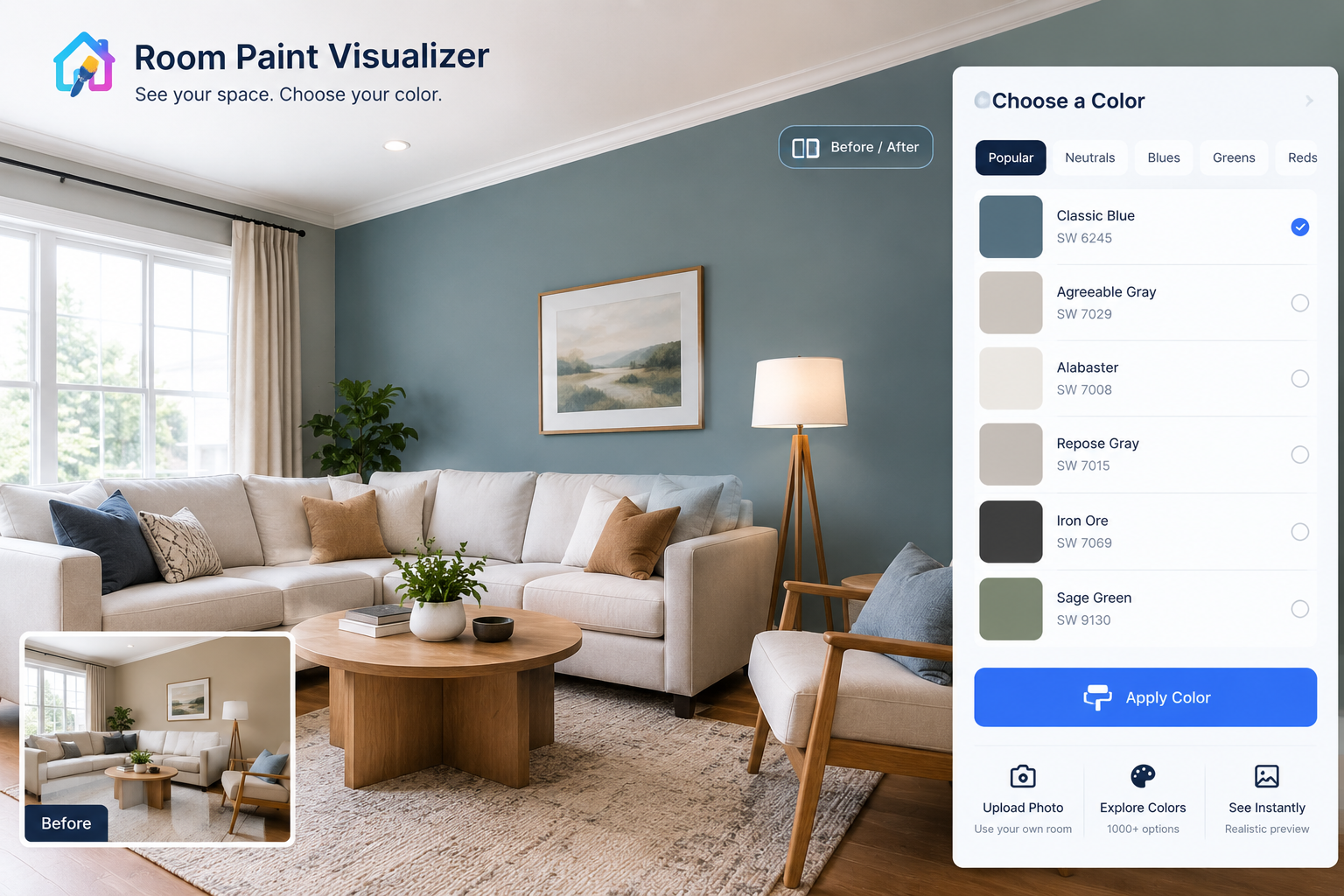
It can help assess layout, proportions and broad colour relationships. Screens, photography and lighting alter colour, however. Confirm paints and fabrics with physical samples before placing an order, especially for custom work.
The most useful refresh starts by understanding what already works. Keep those strengths, resolve the biggest mismatch and spend only where a change improves the room.
If you want to compare arrangements before committing, the DecorAdTechadvice redesign tool can help you explore a direction. Use the preview as a planning aid, then verify dimensions, materials and colours in your own home.
Latest News DecoratorAdvice.com: A Practical Home Filter — Explore how to assess your current furniture and layout in the related article to make informed decorating updates that complement your existing pieces.
How to Decorate My House: A Complete Room-by-Room Guide (2026) — For practical steps on transforming your space while incorporating existing furniture, check out the room-by-room framework in our complete decorating guide.
The Decoradhouse Guide: Practical Ideas for a Home That Actually Works — Explore practical ideas in The Decoradhouse Guide to create a functional layout that complements the furniture you already own.
Scandinavian Style Interior Decorating for Everyday Living — Explore how to incorporate Scandinavian design principles into your existing decor for a cohesive and inviting living space.
thehometrotters blog home ideas — Explore simple, cost-effective strategies from thehometrotters blog to enhance your space without a major renovation, complementing your existing furniture design.