| Consideration | Practical expectation |
|---|---|
| Best for | Comfortable rooms with restrained colour and useful storage |
| Budget range | Low for textiles; mid for furniture; high for fitted work |
| Difficulty | Manageable decorating; professional help for building services |
| Time | A weekend refresh to several weeks with deliveries |
| Maintenance | Regular dusting, textile care and finish-specific wood care |
- Check daylight before choosing white. View large paint samples morning and evening. In cool, shaded rooms, a gentle cream or muted pink-beige may feel more welcoming than a blue-grey white.
- Measure furniture and circulation. In small spaces, favour pieces whose depth suits the room. Slender legs reveal more floor, but one enclosed cabinet often works harder than several open shelves.
- Make rental changes reversible. Use freestanding storage, washable rugs and plug-in lamps. Obtain permission before drilling or painting; adhesive fittings can also damage finishes.
- Adapt textiles to climate. Linen and cotton suit warm conditions; wool adds comfort in cooler homes. Strong sun calls for suitable window coverings, not permanently exposed upholstery.
- Spend on the daily contact points. Prioritise a supportive chair, comfortable sofa or durable dining table before decorative objects.
Scandinavian Style Interior Decorating for Everyday Living
What determines the scale of the project?
Warm simplicity, not an all-white formula
Plan around your actual room
Choose how much to change
Pair materials without making everything match
Budget for substance and everyday care
When this look needs adjusting
Questions before you buy
Must the walls be white?
Can I keep my dark sofa?
Is flat-pack furniture suitable?
What lighting works best?
Do I need real wood flooring?
Can I include patterns?
Is this practical with pets?
Will it date quickly?
Related reading
Scandinavian rooms can look inviting in photographs yet feel surprisingly bare when copied at home. The difference usually lies in material, proportion and lighting—not how much white paint you use.
For homeowners and renters, scandinavian style interior decorating works best as a way of choosing useful, comfortable things. You don't need an empty room or matching pale-wood furniture. You need enough breathing space to appreciate what you keep.
Keeping existing floors and larger furniture makes this primarily a decorating project. Costs rise when you replace upholstery, fit storage or alter lighting circuits; bespoke joinery can quickly outweigh the accessories budget.
Scandinavian design encompasses varied Nordic traditions, but practical furniture, natural materials and attention to light recur. Minimalism may reduce possessions for visual restraint; a Scandinavian-inspired home can happily accommodate books, patterned fabric and inherited pieces.
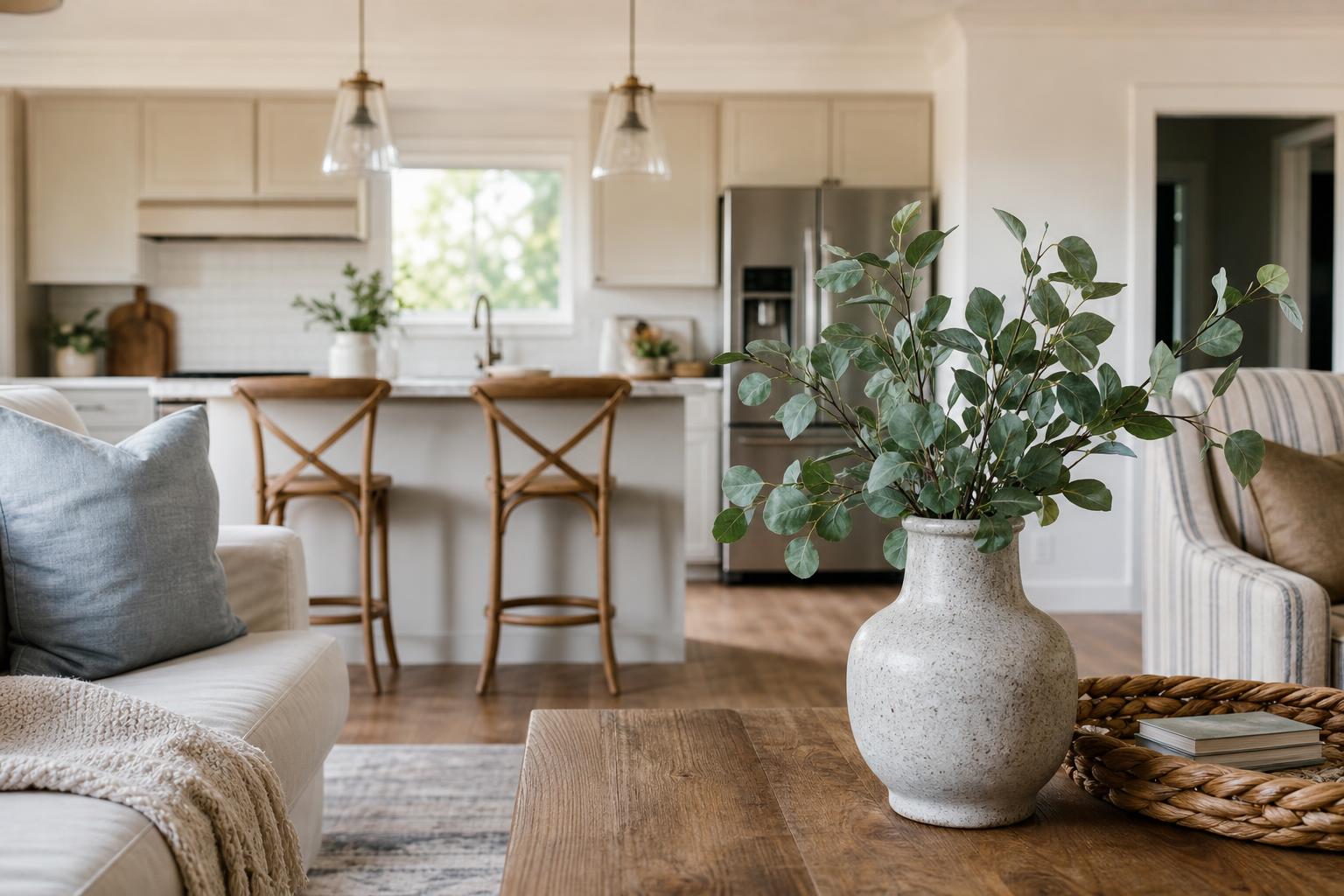
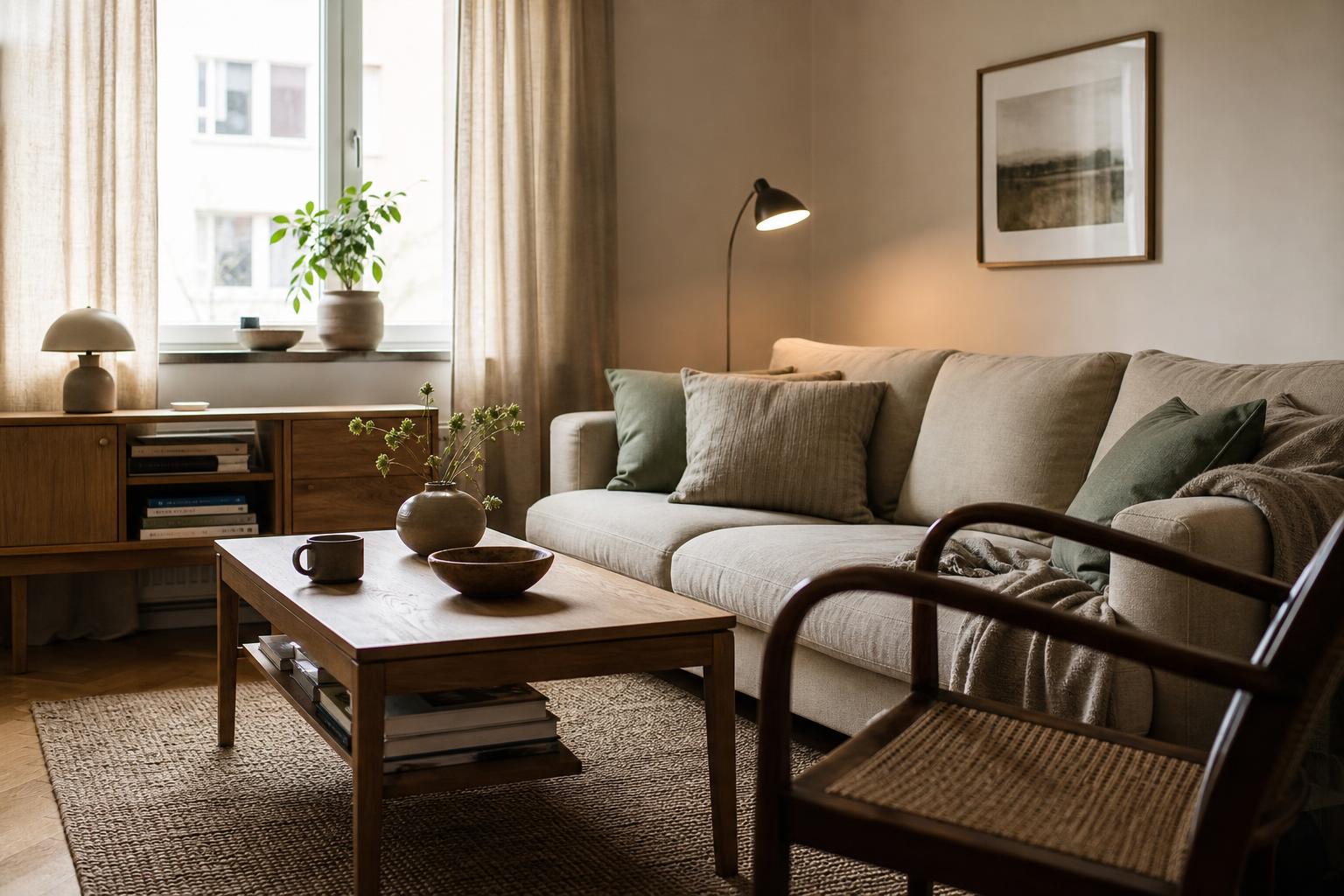
Think muted contrast rather than colourlessness: chalky walls, oak or birch, woven upholstery and a few darker accents. Warmth comes from surfaces you touch as much as colours you see.
A textile-and-lighting refresh costs least and preserves serviceable furniture. Its limitation is that cushions cannot correct an oversized sofa or inadequate storage.
A selective furniture update offers more control over scale and materials. Replace the piece causing the most friction first; buying a complete coordinated set can make the room feel like a showroom.
A designer consultation or fitted scheme helps with awkward proportions and storage. Advice adds cost, but a focused consultation may prevent expensive sizing mistakes without requiring a full renovation.
Pale timber works well with wool, linen, ceramics and brushed or painted metal. Existing walnut furniture can stay: repeat its deeper tone in a frame or lamp base to give it context.
Rustic pieces and restrained mid-century shapes are usually comfortable companions. High-gloss finishes, mirrored furniture and elaborate metallic details can compete with the quieter surfaces; use them sparingly if you want to retain the overall character.
At the low-budget level, rearrange existing pieces and change lampshades or cushion covers. A mid-range project might add a rug, reading lamp and one well-made furniture piece. High-budget work includes flooring, quality upholstery and fitted cabinetry; request local quotations rather than relying on universal room prices.
Common overspending includes replacing sound dark floors simply to get a pale backdrop, and buying numerous inexpensive accessories to manufacture warmth. Conversely, a cheap rug that sheds heavily or cannot tolerate your household is rarely good value.
Follow manufacturers' cleaning instructions for timber finishes. Use coasters, vacuum upholstery and choose removable covers where practical. Check rug care labels before assuming natural fibres are washable.
Anchor tall storage using fixings suitable for the wall and furniture. Keep textiles clear of heaters, and use licensed professionals for electrical alterations.
Strict pale palettes may be a poor fit for households that dislike visible marks or need equipment constantly within reach. Open shelving also demands upkeep. Keep the useful principles—comfort, durable materials and good proportions—without imposing visual emptiness on a busy home.
No. Muted green, blue or warm beige can provide an equally calm background.
Yes. Balance it with lighter textiles and repeat its colour elsewhere.
Yes. Judge stability, repairability and proportions rather than price or origin alone.
Combine general light with reading lamps and softer local light; avoid relying on one ceiling fitting.
No. Existing floors can work with a suitably sized rug.
Yes. Stripes, checks and modest botanical prints add welcome variation.
Choose robust, cleanable upholstery rather than delicate pale fabrics.
Useful furniture and repairable materials generally outlast trend-led accessories.
Keep comfort ahead of appearance. If you're unsure what to retain, try the DecorAdTechadvice redesign tool to explore a direction before committing to purchases.
How to Decorate My House: A Complete Room-by-Room Guide (2026) — Explore the room-by-room guide to learn how decluttering and choosing a cohesive color palette can enhance your Scandinavian-inspired decor.
Latest News DecoratorAdvice.com: A Practical Home Filter — Explore how to assess decorating updates in the related article to ensure your Scandinavian style aligns with your home's layout and climate.
thehometrotters blog home ideas — Explore practical tips in the Home Trotters blog for making small, impactful changes that enhance your Scandinavian-style interior without a hefty budget.
The Decoradhouse Guide: Practical Ideas for a Home That Actually Works — Explore practical ideas for a home that works by discovering how better layout and light can enhance your Scandinavian style.
Updating a 2000s Tuscan House Without Losing Its Warmth — Explore how incorporating warm palettes and practical design elements from Tuscan style can enhance your Scandinavian-inspired interior.