Updating a 2000s Tuscan House Without Losing Its Warmth
A 2000s Tuscan house often has good ingredients: substantial doors, generous rooms, stone floors, and architectural depth. What dates it is usually the accumulation—amber walls, ornate ironwork, heavily glazed cabinets, and several competing stone patterns.
For owners planning a refresh, or renters working around permanent finishes, the aim is not to erase every Mediterranean reference. It is to keep the warmth while reducing visual weight.
What Determines the Scope and Cost?
Flooring, cabinet condition, and changes to plumbing or electrical layouts drive the budget. Paint and furnishings are relatively low-cost; professional cabinet refinishing sits in the middle; replacing continuous stone floors or rebuilding a kitchen is high-cost work.
| Factor | What to expect |
|---|---|
| Best for | Sound interiors with dated decorative finishes |
| Budget range | Low for styling; mid for refinishing; high for replacement |
| Difficulty | DIY decorating to specialist renovation |
| Time | Days for styling; weeks or months for construction |
| Maintenance | Finish-dependent; stone needs suitable cleaning |
Read the Existing Materials Before Choosing Paint
The suburban Tuscan look borrowed from Italian country houses but often concentrated the ornament. Faux plaster—paint applied to imitate aged plaster—is one common example.
Start with what you cannot reasonably change.
- Identify undertones. Travertine may read pink, yellow, or grey. Hold large paint samples beside it in daylight and evening light; bright white can make warm stone look unexpectedly orange.
- Set a budget boundary. Separate repairs, decorative changes, and optional replacements. Keep a contingency for concealed damage or preparation work.
- Adjust for scale. In small rooms, remove bulky valances and oversized accessories before buying smaller furniture. Keep useful circulation space clear.
- Account for tenure and climate. Renters should seek written permission for alterations. Use freestanding lamps and washable textiles first. In hot, sunny climates, retain effective shading; in humid rooms, resolve moisture before refinishing.
Choose Between Editing, Refinishing, and Rebuilding
An editing-only refresh keeps floors, cabinetry, and counters. Simpler window treatments, restrained lighting, and fewer decorative objects cost less, though the original finishes remain prominent.
A targeted refinish changes selected surfaces, such as cabinet doors or walls. It offers more control but depends on careful preparation and compatible coatings.
A larger renovation makes sense when storage, circulation, or failing materials are the real problem. Replacing functional stone merely because it is unfashionable is harder to justify.
Spend on the Most Visually Dominant Features
Avoid replacing cabinet hardware while ignoring a sprawling, highly patterned backsplash. Small purchases can accumulate without changing the room's overall impression.
Compare written quotes that include preparation, removal, disposal, and making good adjacent surfaces. Cabinet painting is not automatically inexpensive: damaged doors, grease contamination, and elaborate profiles increase labour. Decide whether the existing cabinet layout deserves that investment before approving it.
Respect Stone, Wiring, and Structural Limits
Never assume a decorative-looking column or arch can be removed. Have structural changes assessed by an appropriately qualified professional, and use licensed trades for electrical or plumbing alterations.
Check substrate condition before covering tile. Added flooring thickness can affect doors, stairs, and appliance clearance. Avoid acid-based cleaners on marble, limestone, and travertine; they can etch the surface.
Pair Warm Materials with Quieter Shapes
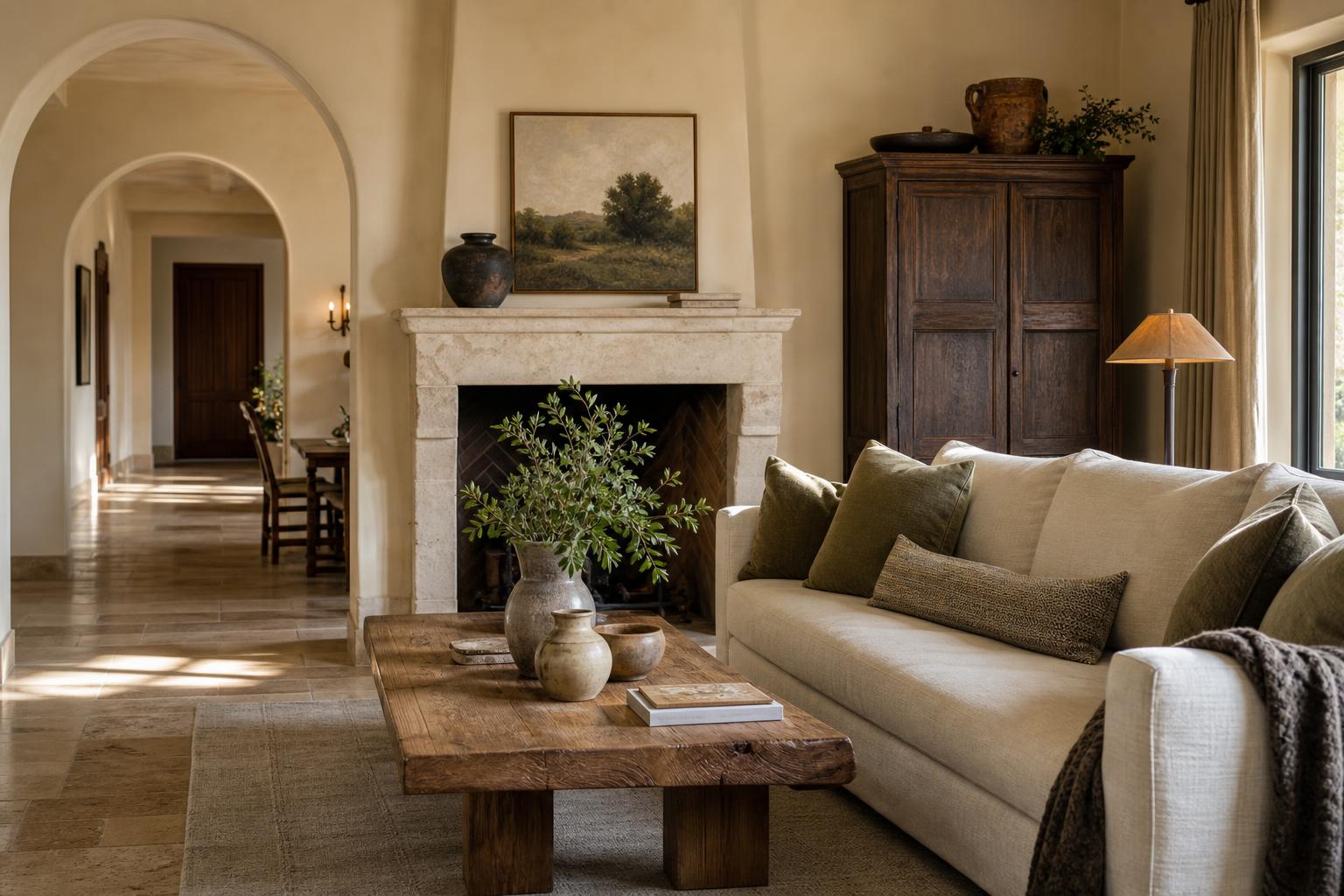
Creamy off-white, muted olive, tobacco leather, linen, and gently grained oak can sit comfortably beside warm stone. Choose simpler silhouettes: a plain pendant often works better than another scrollwork fixture.
Cool blue-grey paint, stark white cabinetry, and glossy black accents can clash with yellow-beige floors when introduced without testing. A neutral rug can connect finishes without requiring every surface to match.
When Keeping the Tuscan Envelope Is the Wrong Approach
Cosmetic work is a poor fit when leaks, inadequate ventilation, failing cabinets, or an impractical layout dominate daily life. Address those problems first. A deliberately cool, minimal interior may also require more replacement than an economical refresh allows.
Keep the Finish Schedule Manageable
Choose washable wall paint for busy areas and removable upholstery covers where practical. Follow the stone supplier's advice on sealing; not every surface needs the same treatment. Save paint names, grout details, and care instructions so future repairs remain straightforward.
Questions About Updating Tuscan Interiors
Must I remove travertine floors?
No. Sound travertine often works well with quieter walls and furnishings.
Should every wall be white?
No. A softened neutral that suits the stone is usually safer.
Can cherry cabinets stay?
Yes. Reduce surrounding red and amber tones before considering refinishing.
Is wrought iron always dated?
No. Simple iron pieces can remain; excessive scrollwork creates more visual weight.
Can I paint textured walls?
Usually, but paint changes colour, not texture. Test preparation and coverage first.
What should renters change first?
Try rugs, curtains, lamps, and accessories, respecting lease restrictions.
Will cooler bulbs fix yellow rooms?
Not necessarily. Test bulbs with good colour rendering before repainting.
Should all metal finishes match?
No. Repeat a restrained selection rather than introducing unrelated finishes everywhere.
Keep the Warmth, Reduce the Competition
The strongest update usually retains worthwhile materials and simplifies what surrounds them. Use the DecorAdTechadvice redesign tool to explore a restrained palette before committing to purchases.