| Project detail | At a glance |
|---|---|
| Best for | Households that already cook outside regularly |
| Budget range | Low: movable equipment; mid: modular units; high: serviced built-ins |
| Difficulty | Simple furniture placement to multi-trade construction |
| Time | A weekend setup to several months with approvals |
| Maintenance | Clean after cooking; inspect and protect seasonally |
- Low commitment: roughly $500–$2,500. A modest freestanding cooker, outdoor prep furniture and basic accessories, with no utility construction.
- Mid-range: roughly $3,000–$12,000. A limited modular arrangement with an appliance and durable worktop, assuming an uncomplicated site.
- Higher scope: $15,000–$40,000 or more. Custom construction and services; substantial roofing or terrace rebuilding can increase this considerably.
Outdoor Kitchen Ideas for Easier Cooking and Cleanup
What makes the project bigger—and more expensive
Plan one ordinary dinner before choosing equipment
Trace the route from fridge to table
Give a small patio fewer jobs
Make rental and climate checks early
Choose how much kitchen belongs outdoors
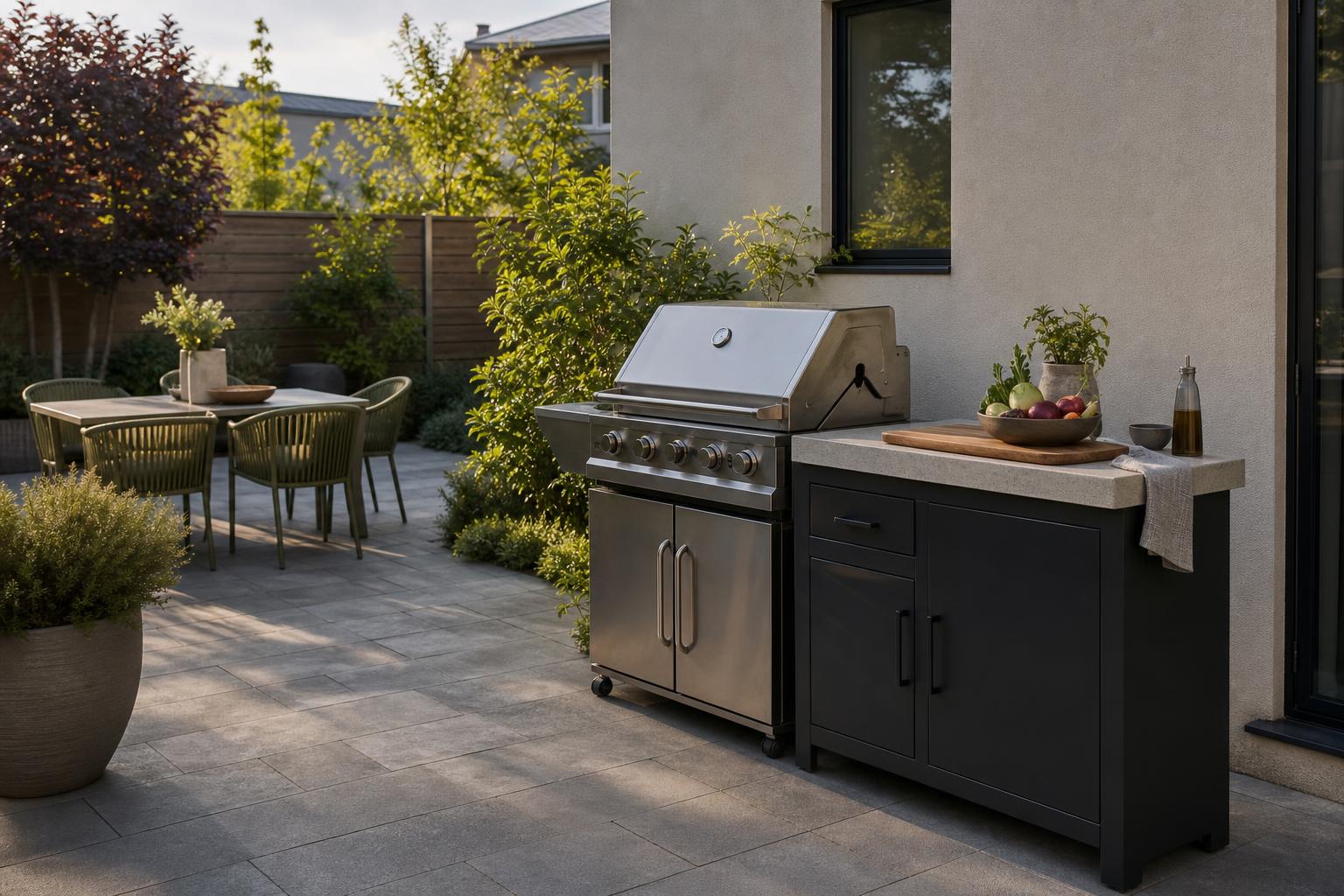
A freestanding appliance and prep trolley
A modular run of cabinets
A custom built-in station
Spend on the work surface before the extras
Resolve fire, power and water before styling
Pair durable finishes with comfortable dining
Know when a permanent kitchen is the wrong investment
Design for the cleanup you will actually do
Questions worth asking before you build
Does an outdoor kitchen need a sink?
What is the most useful addition after a grill?
Can I use ordinary indoor cabinets outside?
Is stainless steel maintenance-free?
Can a refrigerator stay outdoors all year?
How close should cooking be to the dining table?
Do I need planning permission or permits?
Should I build everything at once?
Start with the part that saves you work
Related reading
An outdoor kitchen can look impressive and still send you indoors six times before dinner. Missing landing space, damp storage and a bin across the patio make cooking harder than it needs to be.
The most useful outdoor kitchen ideas start with the meal rather than the masonry. Where will you put raw ingredients, rest a hot tray and collect dirty plates? For homeowners improving a patio, renters using movable furniture and anyone considering built-in work, those questions help separate useful additions from expensive decoration.
Utility connections, ground preparation and permanent shelter usually expand the scope more than accessories do. Keeping washing and refrigeration indoors reduces installation work, while a sink, fixed gas supply or roof introduces professional trades and potentially permits.
Write down everything needed for a meal you make often. Include serving dishes, drinks, utensils and rubbish—not just the grill. Then walk the route from the indoor kitchen to the cooking area and dining table.
Keep that route direct without placing the cook in a doorway. Provide a stable, heat-resistant landing surface close to the appliance, outside required clearances. Separate raw-food preparation from cooked-food serving, using different boards and trays where counter space is limited.
A compact outdoor kitchen usually works better as a cooking-and-prep station than a miniature indoor kitchen. A narrow run of storage and worktop may be enough; drinks can stay near the dining table.
Mark furniture footprints with tape before buying. Test the arrangement with chairs pulled out and appliance doors open. Avoid fixed stools where their occupants would block the route past the grill.
Renters should confirm lease conditions and building rules before purchasing cooking equipment. Some balconies prohibit combustion appliances altogether. Removable furniture does not make an otherwise prohibited setup acceptable.
Note prevailing wind, afternoon sun, driving rain and winter temperatures. Coastal salt calls for corrosion-resistant specifications and regular rinsing; freezing climates require a winter shutdown plan for any water supply.
This is the lowest-commitment approach. It suits occasional cooking and lets you adjust the layout before building anything permanent. Choose outdoor-rated furniture with lockable wheels and a stable base, keeping all furniture outside the appliance’s required clearances.
The compromise is storage and weather protection. A trolley may need shelter between uses, and uneven paving can make moving it awkward.
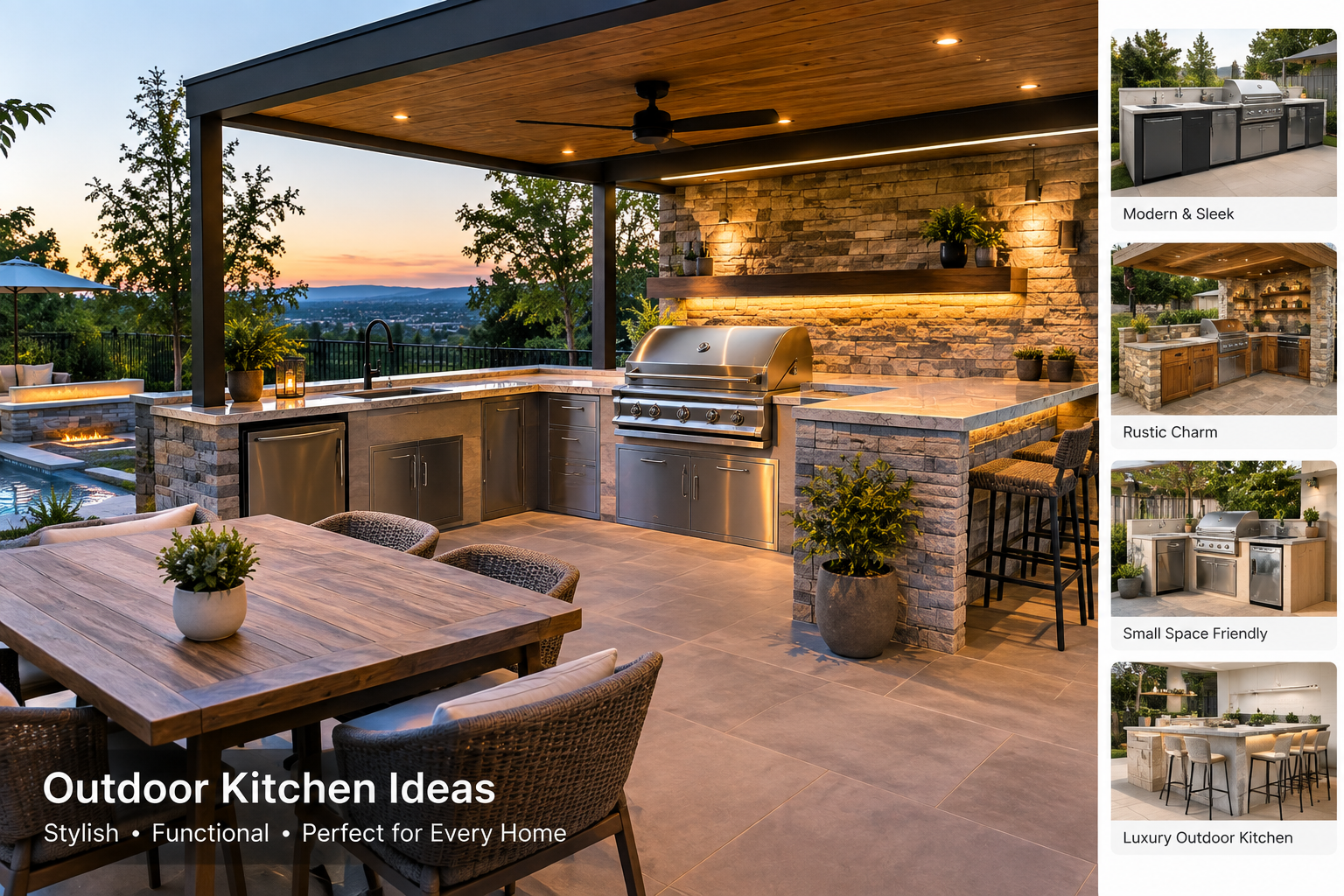
Prefabricated outdoor modules offer more worktop and enclosed storage without a fully bespoke build. They work well when you need a defined cooking station but want fewer construction decisions.
Check levelling requirements, outdoor warranties and compatibility with your chosen appliance. “Modular” does not necessarily mean portable, inexpensive to install or suitable for every climate.
Custom construction makes sense for frequent use, difficult site dimensions or a carefully integrated terrace. It can accommodate generous preparation space and concealed services.
It also makes mistakes harder to reverse. Confirm appliance dimensions, enclosure ventilation and future replacement access before masonry or cabinetry is fabricated.
Set the budget around a working station first: safe cooking equipment, useful counter space, a sound base and adequate light. Add refrigeration, a sink or specialist appliances only when they solve a recurring problem.
These are illustrative installed-project allowances in US dollars, not quotations; local labour, taxes and site conditions vary substantially:
Request itemised quotes. Check whether delivery, foundations, electrical work, drainage, permits and making good disturbed surfaces are included. Keep a contingency for concealed site problems rather than allocating every available dollar to appliances.
A common overspend is buying a pizza oven, side burner and refrigerator before allowing enough room to put down a tray.
Follow the appliance manufacturer’s clearances from walls, fences, vegetation and overhead structures. Never assume a grill can sit beneath a pergola or roof simply because the sides are open. Covered installations may require specific equipment, extraction and local approval.
Have licensed professionals handle fixed gas, electrical and plumbing work. Outdoor electrical equipment needs suitable weather protection and locally required shock protection, such as GFCI or RCD devices. Do not plan a permanent kitchen around trailing extension leads.
An outdoor sink also needs an approved wastewater arrangement; draining food-contaminated water into the garden is not a default solution. Store fuel cylinders according to manufacturer instructions and local rules, never inside an unventilated cabinet.
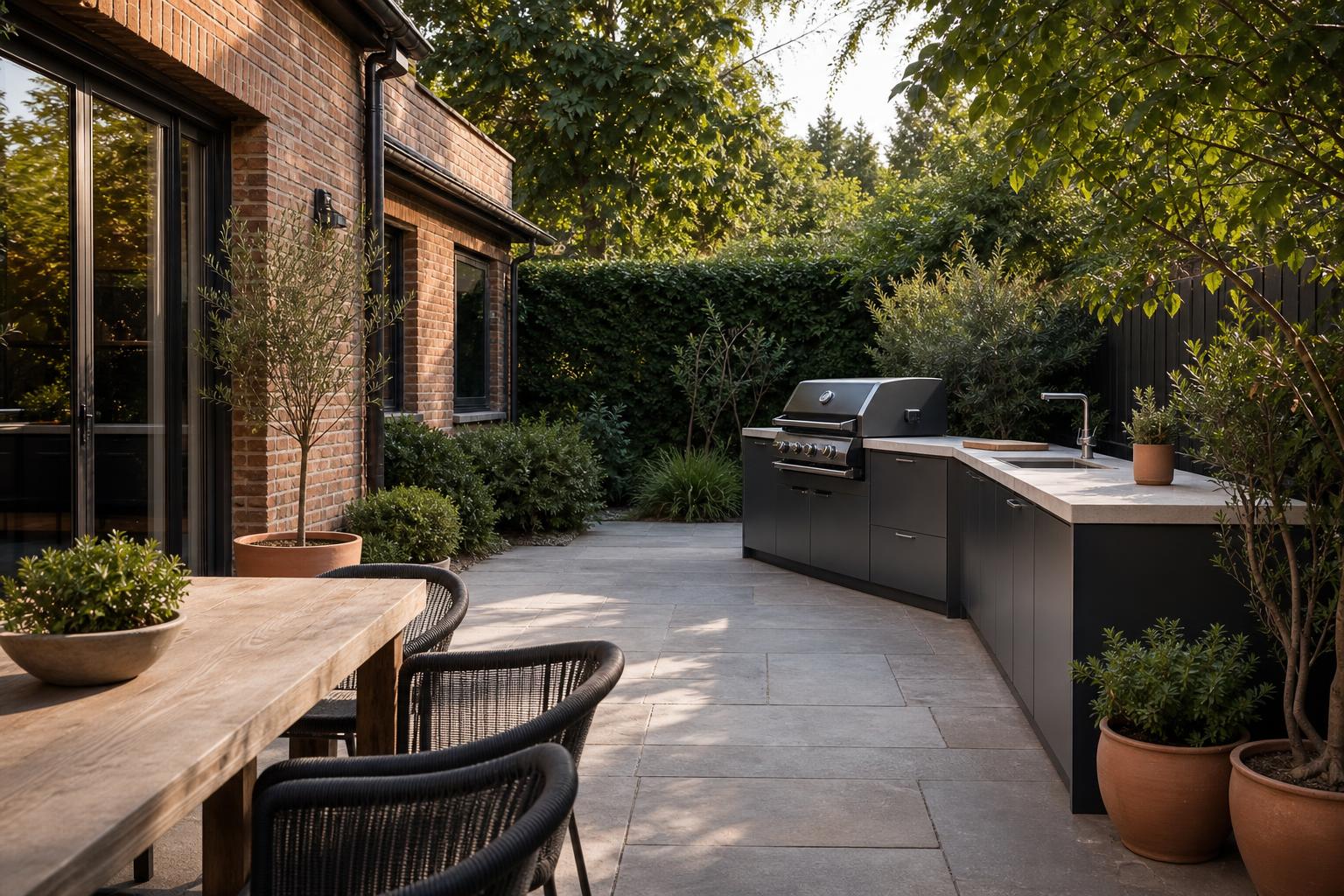
Repeat one or two materials from the house or terrace so the cooking station feels connected to its setting. Pale masonry, muted cabinetry and a warm timber dining table can work well together, provided combustible elements stay clear of heat.
Use task lighting over preparation areas and softer light at the table. Avoid glare aimed into the cook’s eyes. Specify counters for exterior exposure: some engineered quartz products are unsuitable outdoors, while dark surfaces can become uncomfortable in direct sun.
Glossy indoor tiles underfoot, absorbent upholstery beside grease-producing appliances and decorative screens that trap smoke are poor pairings, however attractive they look initially.
If outdoor cooking happens only a few times each year, a good freestanding appliance may serve you better. Permanent construction is also difficult to justify where drainage is unresolved, access is tight or the only available position carries smoke toward neighbouring windows.
Improve paving, shade or dining comfort first if those problems are what keep you indoors.
Keep a washable waste container nearby and provide a tray for carrying dirty dishes inside. Store only items that tolerate outdoor conditions; enclosed cabinets are not automatically dry or pest-proof.
Clean grease after cooking, following appliance instructions, and let equipment cool before covering it. Inspect seals, fasteners and corrosion seasonally. Maintain stone or timber according to the specific finish, and arrange proper winterisation of plumbing where freezing is possible. Leave service components accessible rather than burying them behind decorative panels.
No. If the indoor kitchen is close, carrying dishes inside may be simpler than installing and maintaining plumbing. Keep handwashing readily accessible.
Usually a stable preparation and landing surface. It supports almost every meal without adding another appliance to maintain.
Generally not. Humidity and water can damage boards, finishes and hardware, even beneath a roof. Choose products explicitly intended for outdoor conditions.
No. Grade, finish and exposure matter. Salt and grease still need cleaning, using methods approved by the manufacturer.
Only if its rating and operating-temperature limits suit the location. Some outdoor-rated models still require seasonal shutdown or protection.
Close enough for easy serving, but outside appliance clearances and away from smoke. Leave circulation space behind occupied chairs.
Possibly. Roofs, structures, utilities and drainage can trigger approvals. Check local requirements and any landlord or association rules before ordering.
Not necessarily. Plan the complete layout and likely service routes first, then phase optional features without compromising safety or access.
A successful outdoor kitchen makes an ordinary dinner easier, not just a party more impressive. Prioritise preparation space and a short cleanup route. To test the arrangement before committing, explore your layout with the DecorAdTechadvice redesign tool.
Outdoor Kitchen Ideas That Fit Your Space and Budget — Explore how to design an outdoor kitchen that maximizes your space and budget while incorporating practical prep zones and easy cleanup solutions.
The Decoradhouse Guide: Practical Ideas for a Home That Actually Works — Explore the Decoradhouse Guide for practical layout tips that can help you design efficient prep zones in your outdoor kitchen.
Latest News DecoratorAdvice.com: A Practical Home Filter — Explore how assessing your home's layout and routines can help you design an outdoor kitchen that streamlines cooking and cleanup.
Essential Smart Home Fire Safety Setup for Residential Care Spaces — Explore how integrating smart home fire safety measures in your outdoor kitchen can enhance safety during cooking and cleanup.
House Upgrade Tips: Smart, Budget-Friendly Ways to Improve Your Home in 2026 — Explore budget-friendly upgrades that can enhance your outdoor kitchen's functionality and aesthetics, making cooking and cleanup even easier.